
Gaming News & Articles
.jpg?width=690&quality=85&format=jpg&auto=webp) Eurogamer
EurogamerOrbitals review
Immaculate anime stylings aside, Orbitals doesn't bring an awful lot to the post-It Takes Two co-op renaissance, but switch to Japanese and it's never a bad hang. Orbitals' twin protagonists Maki and Omura have this adorable little habit. When they leave behind a tool – a ground-pound backpack or hacked microwave oven – they'll often say goodbye to it. Or sayonara, rather, if you're playing Orbitals in Japanese (as well you should; subs over dubs any day). This habit is, first and foremost, a nice little character touch. We first meet this pair as wide-eyed tots, in a sumptuous hand-animated cinematic. Jumping forward 15 years on, not much seems to have changed. They're still running around their starship home, taunting one another as they race: "You're the slowest slowpoke ever!" This is a little jarring, given what happened, just moments before, in that introductory cinematic. On a space-station base about to explode, the two wee babes are put into a machine that stores their consciousness then – as far as I can tell – incinerates them both then Ctrl-Vs their minds over into two freshly baked clone bodies. In fairness, running around in these bodies is a joy. My co-op partner and I settle on who will be who – Orbitals being a two-player split-screen affair, one of the growing number of games being made in the mould of It Takes Two and Split Fiction that I assume we're all agreeing to call Hazelikes – and then spend a good few minutes just showing off our respective run animations to one another. These are absolute works of art. My partner enthuses about the way Maki patters down steps, while I'm more partial to Omu's seamless segue from a louche, hand-in-pocket idle stance into a full Naruto run. Here's an Orbitals trailer to show it in action.Watch on YouTube And the fact that they don't seem to have been at all traumatised by their youthful experience of being forcefully respawned? Well, that's just Maki and Omu for you: the kind of good-natured kids who'd wave goodbye to an inanimate object, and can laugh when they fall into lava and are reconstituted from their base atoms. They keep nattering away and occasionally even breaking out into song, all the way through their adventures, even when things take a grimmer, weirder turn. Even an inveterate grump like me can't help but be endeared by this kind of eternal optimism, and develop a genuinely fondness for these cheery idiots. After I've taken a quick trip to the language settings menu, anyway. Voice actors Rebecca Wang and Stephen Fu do a perfectly good job with the English script, but the characters' constant twittering is much more tolerable in a language you (or at least I) don't speak. My co-op partner sticks with the default English dub for a while longer – the game is happy for you to be on different languages – and there are moments where, as I'm being charmed by Maki and Omu's antics, I'm sure I hear a quiet groan coming down the mic. In the grand Dragon Ball tradition, Maki (left) and Omu (right) share their names with foodstuffs. Anyone else fancy an omelette? | Image credit: Kepler Interactive / Eurogamer But back to those little goodbyes. It feels like the game's developers tipping you the wink, acknowledging that they know what makes a good Hazelike. They should – Orbitals game director Jakob Lundgren previously worked as a designer on It Takes Two and Split Fiction. It's all about introducing an idea (which Orbitals also does with aplomb: picking up a new gadget, you're hit with the kind of close-up shot you'd expect to find in an infomercial) and then dropping it before it gets old.This frenetic pace of invention is necessary in Hazelight's games, because of the way it offsets their narrative shortcomings. Five-minute cutscenes in any game are a risky gambit, but doubly so in one where you have a partner constantly there on voice comms. It's like someone wandering into the pub, sitting down at your table and interrupting the conversation to tell you the plot of a TV show they were just watching. Hazelight offsets this by pulling a new cool toy out of their bag every few minutes, making the blather much more palatable. (Given my choice of analogy, I should probably caveat here: don't take toys from strangers in pubs, kids!) Orbitals inherits many of the same tendencies. The game rambles its way through a tale that I'm not sure makes a huge amount of sense – though in fairness we were sometimes talking over it. It does fare better than its Hazelight cousins in a couple of areas, at least. For one, Maki and Omu are considerably less annoying than any characters Josef Fares has come up with since the speechless brothers from Brothers. And in cutscenes, they have the distinct advantage of being produced by Japanese animation house Studio Massket. They're a real treat for the eyes, even if your ears are otherwise engaged. This guy, who you interrupt washing his alien baby, is an absolutely classic anime weirdo. | Image credit: Kepler Interactive / Eurogamer But when it comes to offsetting narrative shortcomings by dipping into the toybox? I fear that Orbitals' comes up a little bare. Early on, the game presents you with three Proton Pack-sized gadgets, hefty enough that each player can equip just one of them at time. These are all essentially variants on the same basic aim-and-shoot interaction, just firing different payloads. There's the Liquid Launcher, a kind of weaponised hosepipe that can be used to extinguish fires or spin water wheels, in a constant stream of wet or (using the alt-fire mode) a single big splat. The Beam Cannon works very similarly, but with lasers. The Scrap Hook can grapple onto marked points then, with a pull of the other trigger, wrench open panels and doors.Get used to these tools, because they'll be sticking around for the duration – no sayonaras here. Their abilities get repurposed, and mixed in different combinations (three tools being more than two players can carry) and occasionally merged with other temporary gadgets that do get waved off-stage after a few uses. The results, though, are rarely all that exciting, and often leave a sense of déjà vu. One room, for example, has you grabbing seeds with the Scrap Hook, planting them in soil then watering them with the Liquid Launcher so they grow into platforms that can carry a player's weight. It makes for a perfectly decent stretch of co-op puzzle-platforming… but didn't we do all this already, with It Takes Two's nailgun? 1 of 3 Caption Attribution 1: Things get seedy in the Secret Garden. 2: Omura on the pull. More distinct is the aforementioned microwave – as in, a popty-ping Ginsters-warmer. In Orbitals, this device gives you access to some unlikely mashup of Metal Gear Solid's steerable Nikita missile, Sam Raimi's trademark shaky-cam bullrush, and those invisible platforms in Astro Bot that only appear when you shine light on them. But even this goes underutilised, used in puzzles that feel like the first five post-its you'd stick on the ideas wall, never getting around to the really good, weird stuff.Lightning certainly never strikes in the way it did with Split Fiction's hoverbike captcha sequence, or flatulent flying pigs, or the literal boundary pushing of its grand finale, or… You get the point. I played that game eighteen months ago and can still rattle off a dozen moments like this. A few days after rolling credits on Orbitals, I'm having to look back over my screenshots as a memory-jogger. One of the things they remind me about is Maki and Omu's all-too-brief encounter with a pink cetacean alien. "Here we go," I say into the mic as they climb aboard, readying myself for a big whaleback-riding set piece, probably something akin to Split Fiction's sandfish surfing. But practically before the words are out, the game cuts to a shot of them disembarking. It's so abrupt, and deflating, that we end up speculating over voice comms whether this was the victim of a production re-scope. This is not something you ever want to be thinking about in the moment – and it's not the only time it happens. 1: Why is Omura playing with the cat rather than manning his station here? Just to annoy Maki, probs. 2: Ship shape(s). | Image credit: Kepler Interactive / Eurogamer The beautiful anime presentation aside, Orbitals' big differentiator from the Hazelike crowd is that, alongside the on-foot puzzle platforming, there are sections in which Maki and Omu fly their own spaceship together. One sits in the pilot's seat, the other mans the weapons, these responsibilities divvied up on the fly based on whoever called shotgun.These modes are woven together seamlessly, so that on one side of the screen, Omu might be exploring the ship's cabins, while the other half provides a view of space, as Maki navigates through an asteroid field. At one point, I wander about mid-flight – for no particular reason other than curiosity, and to annoy my co-op co-pilot – and discover a weapons room, complete with ammunition crates that can be lugged about. Everything seems set up for a kind of co-op FTL, or 3D Lovers In A Dangerous Spacetime, where you're rushing around between stations mid-battle. For whatever reason, though, Orbitals never makes use of the intriguing asymmetry of scale and interaction that's available here. 1 of 4 Caption Attribution 1: This button-masher puzzle provokes a few curses before it's complete. 2: The introductory splashes for new items have powerful shopping-channel energy (complimentary). 3: Your ship includes a variety of side activities to play around with between missions. I got thrashed at this one, three times in a row, and thus it is bad. 4: Perspective switching tricks are nothing new in split-screen co-op games, but Orbitals often works best when it goes 2D. The pilot has no control over the ship's pitch, which moves along a sort of invisible road tarmacked through the stars. So, unless the turret is being aimed a full 180° away from the direction of travel – which is only occasionally necessary – the two halves of the screen end up showing almost exactly the same thing, with one side just a little more zoomed-in. These segments actually work much better when the split-screen divide is brought down and the game switches perspective to become a top-down shmup, where the players are effectively responsible for one of the twin sticks apiece. For all these complaints, I find myself wanting to end on a more positive note – Maki and Omu rubbing off on me, perhaps. I wonder if I might've been spoiled by Hazelight's output, and more recently the superior hangouts of Big Walk. A couple of frustrating puzzle executions aside, I never have a bad time with Orbitals, and there's always that buoying factor of playing with a friend. It's just that I've come to associate these games with voice-comm gasps at the sheer audacity of what we're experiencing. So maybe some recalibration of expectations would help.If you can approach it more like an especially shiny pub table, or a shared sofa with some mid-tier anime series on in the background, Orbitals has plenty to offer. Just be aware that, after you've said sayonara, not much of it is likely to stick in the memory. A copy of Orbitals was provided for this review by Kepler Interactive.
 Eurogamer
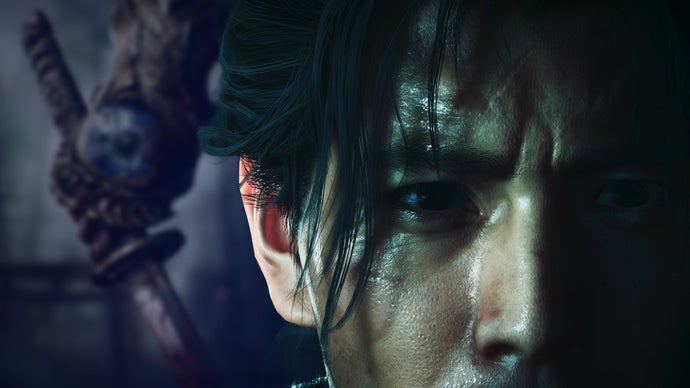
Onimusha: Way of the Sword review
Eat your art out. Image credit: Eurogamer Legendary swordsman Miyamoto Musashi considered himself more an artist than a fighter. A keen strategist and a self-proclaimed master of war, I think it's Musashi's art that hits more keenly than his katana: it's minimalist, monochromatic, a study of nature defined by its simple brilliance. Less is more. Whether intentional or not, I think Capcom may have internalised this philosophy when creating Onimusha: Way of the Sword - a game based loosely on the life and conquests of Musashi. Seldom over-complicated and often composed with artisanal skill, Way of the Sword takes the philosophies of 16th Century Japan's most influential martial artist and somehow applies them to video game development. Making you feel as adept with a blade as the man that is said to have invented the two-sword technique used by many samurai afterwards, Capom devised a fascinating combat system for Way of the Sword (which they hired actual swordsmen to refine and motion capture for, by the way). It relies heavily on momentum, and the keen observations of your enemies. If you ready a light or heavy attack as they strike, you can perform an 'issen' - a counterstrike that acts like a parry, interrupting and damaging your foe and allowing you to make follow-up attacks. But you can't get greedy: Musashi - said to have won over 60 duels in real life - is a better reactor than he is instigator; readying feints, tells, and charges and responding in kind is far more important than simply engaging in a war of attrition. To this end, it feels like your regular attack strings are under-powered and slightly awkward. These are filler moves, tools to confound and compromise, rather than kill. Your most lethal moves come after parries or deflections, or follow on from your dodges and issens. By dancing around your enemies, and forcing them to spend stamina and dignity in whiffing attacks, you open them up both physically and psychologically. It means longer skirmishes can be gruelling; long-winded encounters that rely on your not making a single error, reading and riposting like a true swordsman of legend. It's a more effective role-play than anything I've encountered in Nioh or Wo Long or even Sekiro, to be honest: more concerned with aptitude and application than it is with acrobatics and action. Watch on YouTube Musashi penned a very famous manual on strategic thinking - and how it applied both to his martial technique and to everyday life - called The Book of Five Rings. "Pay attention even to trifles," was one of the maxims he recommended. Capcom teaches you this with its insistent but well-concealed hands; you need to watch - really watch - your enemies every second they're on-screen. Even fodder enemies are animated and telegraphed with so much attention to detail it makes FromSoft's weaker enemies look embarrassing by comparison. "Develop intuitive judgement and understanding for everything," recommends Musashi later in his book. Again, this feels like a pillar Capcom leant on during development: by about halfway into Way of the Sword, I felt like I was looking at the destroyed urban setup of Kyoto with naught by my reflexes, sharpened and primed to cut down enemies before they could so much as lay a finger on me.It's a tightly-constructed power fantasy… if you're good at it. I anticipate the battle system becoming aggravating for some, off-putting for others - especially if they're loyal subjects from the school of Miyazaki, for instance. And, masochists rejoice, it is hard. If you're being ungenerous, you could say the flashing telegraphs for deflect-only attacks, the red colouration of undodgeable attacks, or the glowing blue that denotes a dodge-only attack are simply 'Simon Says' cues, and that the life-or-death split-second decision-making these impart are broadly similar to other games in the same genre. But I think a more generous reading of it is that this visual language - drilled into us as we've studied the Way of the Controller over the past decade-plus of hardcore action games - is used to great effect by Capcom, who manages to craft high-stakes fights (that are always tidal in their nature) that feel fair, familiar, and hard, all at the same time. Not an easy feat. 1 of 8 Caption Attribution When you're not fighting, you're exploring. Way of the Sword is neither completely linear nor open-world, but instead occasionally balloons to let you explore medium-sized areas and complete a couple of repetitive side missions. These distractions give you a better sense of the world you're trying to save from an invasion of 'genma', nefarious beings that want to conquer both the human realm and hell for all the usual reasons: power, infamy, boredom. But, honestly, I think the game would have benefitted from a more blinkered setup: the 'legacy' dungeons and severely-walled paths are for more effective uses of Onimusha's time than what often feel about dalliances around a crumbling Kyoto.Don't dismiss the side content entirely, though; by exploring and finding items and hunting down rogue 'genma', you are empowering Musashi. There's a rudimentary RPG skill tree to master, a simple upgrade path for your weapons and armour, and new skins to unlock for yourself and some of the more prominent supporting characters. "Perceive those things, which cannot be seen," advises Musashi in his book - something Capcom probably took a bit too literally when it gave you a 'Press R2 to see into the demon realm' button that highlights objectives and the critical path for you. At least it speeds the lulls in the game up, somewhat. Driven by an intriguing and compellingly watchable story, Way of the Sword had me pining for boss fights, nearly all the way through. The connective tissue is good, don't get me wrong - fighting mobs and solving simple puzzles makes for a nice self-contained momentum in between the important fights - but the busywork just isn't as impressive as the setpieces. The cutscene direction is less 'inspired by' Akira Kurosawa than it is simply trying to copy him (but to great effect). The camera work, the pacing, and the timing are all superb. I'll take this opportunity to say Way of the Sword is also one of the funniest games I've played in a long time, too - and intentionally so. When you spent two years negotiating the rights to a dead man's face because he's "the quintessential samurai action actor", you're going to want to make sure you do right by him. And Capcom has; the mix of dramatic, funny, and emotive Mifune always seemed to strike is alive and well in Onimusha - which is a bit weird considering he's been dead for nearly 30 years. 1 of 7 Caption Attribution It's the little things: the grimace Musashi makes when he's flung into a wall by an over-powered demon, the little sniff and brush of his nose he does when he's dubious, the single eyebrow raised at an unexpected development… it's almost uncanny. But I believe in this character; his monkey-ish charm, his cocky confidence, his humble belief in the right thing and that eponymous 'way of the sword' that defined his life and his teachings. I want DLC for Way of the Sword just to bask in more of that sumptuous cinematography and pitch perfect characterisation.But, for now, I will just have to replay the boss fights - a nice and easy option available to you from the game's hub. Jumping back into old fights with new gear makes them feel interesting once again, and there's so much texture to these that in all but one fight, I saw a move or created conditions for something special to happen I didn't see in my first dance with the same enemy. That's great combat design; Capcom lets us see the breadcrumbs, but it's up to us to pick up the trail. Image credit: Capcom Onimusha: Way of the Sword can be bested in about 20 hours, if you're rushing. If you want to "become acquainted with every art" and "pay attention even to trifles", though, you're looking at something closer to 30. For me, that's the sweet spot: with a combat system that requires you to be this switched on and focused, and with fights that need to be flashy and somewhat brief in order to not outstay their welcome, this is the perfect sort of length. Onimusha's value comes not from the breadth of its content, but in the artistry of its two best bits: the fighting, and the boss design. It forces you to "do nothing which is of no use", and if you don't learn from your mistakes, you will die. Though some of the connective tissue that binds Onimusha: Way of the Sword together is a bit weak, though some of the pacing and padding is a bit thin, Capcom has once again shown us it is a master of its craft here. The developer dares to say 'no' to the ubiquitous Soulslike design and opt for something more unique, and more fitting for its central character, instead. By insisting you play honestly, learn how to wholly embody Musashi and his philosophies, Capcom forces a level of role-playing that merges narrative and mechanical storytelling. The result? There is no game out there that makes you feel more like a swordsman of legend than Onimusha: Way of the Sword. A copy of Onimusha: Way of the Sword was provided for this review by Capcom.
 Eurogamer
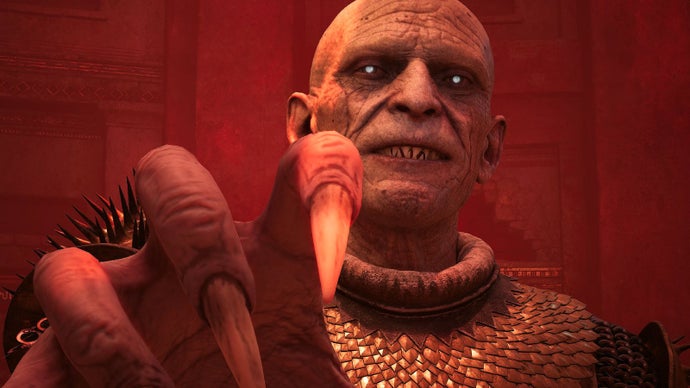
The Blood of Dawnwalker review
CD Projekt Red alumni create a familiar dark fantasy adventure, but one with bold and provocative ideas of its own, that's mostly, enormously successful. There's a lot that's been made of the similarities between The Witcher 3 and The Blood of Dawnwalker in the lead-up to the latter game's release. Why? It's made by the same director, in Konrad Tomaszkiewicz, plus many former people from CD Projekt Red for one. But also because it's clearly trying to evoke a similar experience. There are many times running around Dawnwalker's world where it feels uncannily like The Witcher's. It's the tone of the world, which is earthy and touchable, as historical as it is fantastical, and it's in the way the world reacts to you as a player, with people blurting crude observations as they voice the realities of tough existences. It's there in the brutality of the world too, which can be unflinchingly cruel, just as it's there in the Polish folk music that accompanies it, or the similar user interfaces, the similar gameplay. Even the dark, supernatural themes are reminiscent. These are some of my favourite things about The Witcher 3, a game that's become legendary in RPG terms, so Dawnwalker launches from a powerful springboard. But it's risky to be compared to a great. Thankfully, Dawnwalker manages it: it meets that high bar, if not quite raising it. And it does it while bringing new ideas of its own. The Blood of Dawnwalker launch trailer.Watch on YouTube The biggest of these new ideas is you are the eponymous Dawnwalker. You're a young man called Coen, living in Eastern Europe's Carpathian Mountains, in 1347, who's about to be partially turned into a vampire. Something prevents him from transforming all the way, so he's still able to walk and explore in sunlight, and this duality means he effectively has two forms: vampire and human, and they change automatically relative to whether it's day or it's night. Having two forms allows the game to effectively give you two characters in one, which provides much-needed variation in a many-hours open-world role-playing game such as this - something, since I've already referenced The Witcher 3, that The Witcher 3 suffered from.This is true of both combat and exploration. By day, Coen runs around the world like everyone else - on foot. But by night he has no such restrictions. He can walk up walls and cliff-faces and teleport across rooftops. And nowhere is this more apparent than in the game's central city of Svartrau, which has densely packed houses and therefore rooftops, which night-time Coen can run around on and hunt from above on, whereas day-time Coen has to explore on foot below. I love this. This approach not only uses more of the game's world than if rooted to the ground, opening up a rooftop playground for you, it gives the game more layers of activity to pursue. Some things you can only do at night because they require your enhanced movement capabilities, whereas some things you can only do in the day because you need to be a part of the waking world for it. Moreover, it simply feels cooler to teleport around, or slide down a huge wall with claws, or stand on a vertical wall with gravity shifted, than it does on the ground. Which leads to a pertinent question: why not just be a vampire all of the time? Well, to start with, you can't be: it'll automatically change you when the sun rises. Secondly, there's the issue of time, which I'll come to in a moment. But thirdly, you're also extremely capable during the day, just in different ways. You aren't only a vampire, you see, but a witch of sorts. By day you have extremely powerful spells and abilities that you can't use at night, such as the ability to slow time while speeding up movement to bomb around the world like The Flash. But also, to talk to dead people, and also to perform rituals. These mutually exclusive witchcraft and vampire abilities are linked to skill trees, gelled by a skill tree in the middle - swordsmanship - which is relevant to both forms. 1 of 18 Caption Attribution The other big idea, as referenced, is time. In Dawnwalker, you control it - you determine when time moves. It doesn't just trickle away on its own; day never turns to night without you okaying that transition. You can run around the world buying and selling and fighting the odd pack of wolves and time will effectively stand still. You move time deliberately by performing quests; every quest has a time-cost associated with it, denoted by segments on a time gauge. Should you come across a small and relatively insignificant quest like helping someone out in the world, then, your time gauge in the top corner will ping to alert you to a possible time advancement. Bigger quests demand more time depending on the activity at hand. Even unlocking new skills can cost time, though mostly more powerful skills later on. The game does this because time is intrinsically linked to the game's story, whereby something has happened to Coen's family and he has 30 in-game days and nights to sort it out.This ever-present clock, of sorts, shapes the game, and I've seen concern out there about it. But to begin with, and for a lot of the adventure, it's more of an existential threat than a pressing one. You're aware that you're spending a limited resource but there's so much of it early on that it doesn't seem to matter. There's plenty of time to do things. But time does start to dwindle as you finish quests and start spending time on skills, say. Days will turn into nights that will turn into mornings; 30 days becomes 20 becomes 15. It creates a low-level kind of panic, which I think is nice - time passing is not something I normally notice in a role-playing game. How many days passed in Skyrim? I couldn't tell you. There, the world waits. Here, it doesn't, and I appreciate that - it feels more believable, and it makes time a present factor in the world. Characters say "come back tomorrow" and it means something. Can I afford to? But time also creates a bit of a problem as well. Famously, Dawnwalker doesn't have a main quest that leads you through the game. It has an overarching goal, as mentioned, but how you tackle it is up to you. Dawnwalker’s prologue ends and the valley of Sangora stretches out before you and the game goes: "off you go". Theoretically, you can go anywhere. In fact theoretically you can go and try to rescue your family and confront the final challenge, there and then, though in reality, you probably can't. Areas of the world are higher level than others, which will either kill you or dissuade you from being there early on, so in this way the game invisibly organises itself. There's also gentle direction from important questlines running through the world. There is an invisible hand steering you around, clearly, which I'm grateful for. But it is up to you when to take the final challenge on. I decided to test this with 15 days to go - the half-way point, I suppose. I felt I'd tipped the balance of power in the game and was winning fights comfortably, so on Fair difficulty, the game's equivalent of Normal, I approached the final challenge. I was flattened; I tried a few times and had some success but ultimately met the same end. The enemies were higher level and I left with the distinct impression I wasn't supposed to be there yet. Fine; that's what I'd hoped for - any excuse to go back out into the game's world. 1 of 19 Caption Attribution But then I tried again in vampire form and unexpectedly had a very different outcome. There's a slight imbalance between the two forms in this regard. Eventually, when you have a really powerful sword and really powerful witchcraft abilities, and sword abilities, it probably levels out; but for me at that point, I was much more potent as a vampire. I had some life-gain abilities that meant I lasted longer in combat, and to my surprise, I cleared one battle after another until I was dropping bosses and beat the game. It wasn't easy - it took a few attempts especially on the final, final encounter - but I eventually succeeded without any of the allies I was questing to collect.Naturally, I felt proud about this, and I got an achievement to underline it, but the jarring issue I had came in the epilogue where it became clear I'd missed chunks of characters' story and of the game. I mean, clearly - I'd done about half of what was out there. This jarred because narratively, shouldn't it be a good thing that I saved my family as fast as I could? Except here, the game was also intimating: you missed some stuff, Bertie - maybe you could have used more of your time? That's a clash between the narrative set-up and the RPG nature of the game, I believe. It also concerned me that I'd finished the game much earlier than expected. What do I do now? I'm not sure where I fall on this even now. I reload a save and go back into the world and try to ignore the fact I'm capable of finishing it, and boost the difficulty, but it does play on my mind. Nonetheless, I admire the audacity of offering this possibility at all. The question of "When do I attempt the end?" is far more interesting to me than "When will the game lead me to the end?", and all of the permutations referenced in the epilogue I'm sure will make the conversation around "What did you do in the game - which ending do you get?" a lively one. This is probably a game to play a few times. Plus, the moment I went back out into the world, I was immediately rewarded by a superb quest I would have missed otherwise. Uniformly, they're excellent. All of the quests seem to involve multiple stages and either have interesting or eccentric characters to explore, or mature subjects to explore, or both. They are genuinely interesting; experiencing them is their own reward - though it helps that every activity in the game is materially very well rewarded as well. The quests can be this way because the mix of open-world activities alleviates the need to have any filler. There's a variety of activities you come across while exploring the world that you do there and then - there's no back and forth, unless one activity leads to another quest. The only repeatable kinds of activity tie into a clever notoriety system, whereby each area of the valley is sort of ruled by one of the big boss' generals, so the things you do there - usually against them - end up angering them. There are various different things you can do to this end, but once you do enough of them, they'll come for you, which is great. They'll seek a confrontation somehow. It gives a great sense of purpose to exploring the wider world, while divulging backstory about these generals you otherwise don't get, and there's a lovely potential pay-off if and when you defeat them. A good overview of everything about Dawnwalker you need to know.Watch on YouTube But for all that there's a good mix of things to do in the world, a sense of repetition does creep in. Visually, effort has been made to vary the valley and to take you to other places, but it's still a bit samey. There's also only so many of the same kinds of enemies you can fight, be they soldiers, animals or otherwise, and though it takes a while to acclimatise to Dawnwalker's directional-block combat, eventually you will, and that's when a damage spongy element to enemies becomes mildly gruelling.I should say that you don't have to direction-match blocks - you can "omniblock", as the game calls it - but if you can match the direction, you'll be rewarded, usually with stamina refreshes, but later by skills that trigger from perfect blocks. There's a lot to like about this approach. Enemies never attack at the same time, which was a huge annoyance in The Witcher 3, so it's possible to take down large encampments of soldiers providing you pay attention to the directional indicators as blows come in. There's a sort of rhythm-action element to it that's always baseline entertaining - a battle with your own reflexes. But as the challenge of succeeding drops off, and the novelty of new enemies subsides - and as you grapple with fiddly annoyances like flipping between d-pad-based hotbars, and automatic enemy lock-ons changing if you crowd control one of them - combat can become a slog. Changing difficulty helps this. Especially - and this might sound like a stretch but it's not - upping to the highest difficulty in the game, Duelist. This makes enemies more aggressive and has them attack faster (big-up games that change enemy behaviour rather than just health bars and damage) but it also lowers their health. It makes them more glass-cannony. It takes away directional attack indicators as well (something you can turn on and off at will on other difficulties), but this is not as hard as it sounds like to deal with; it even puts your eyes more on the action than the indicators, which adds immersion. Duelist difficulty is doable, then, eventually, and it alleviates - along with powerful skills and abilities - the slog. Consider it! There are ideas here about how to do things differently, then, and though they don't always work flawlessly, I appreciate the intention. This isn't just a reskin of an existing idea. Presentationally, it wouldn't be enough if it was, to be blunt. Visually it's handsome enough: characters have good detail and expressive eyes, and the game's attention to period detail is especially commendable. The way it throws evening sun on wattle and daub houses in Svartrau, or the way the moonlight twinkles on tiled rooftops, or the morning sun chases away the shadows of the night: these moments are endlessly coo-able. But it isn't a generational leap, if that makes sense. I'm also incredibly impressed with the voice-work of the main characters in the game, with Coen's English-voice actor Will de Renzy-Martin in particular, who's softly spoken delivery reminds me of Tom Hiddleston and is endlessly listenable. Andrew James Spooner as Brencis is another stand-out, as are the actors who play Lacra and Anca - two central characters in the game. Lacra in particular is superb, armed as she is with pithy remarks, purring sensuality, but also vulnerability and depth. Her voice actor hasn't yet been revealed, surprisingly, but I'm trying to find out who it was. But, holistically, the Blood of Dawnwalker is more than these things. This is an RPG daring to do things differently, and a lot of what it does works. It's in little details like blacksmiths that can level up your old gear to match your new gear that I feel RPG expertise and experience from Rebel Wolves - that I feel understanding of how RPGs might play that little bit better. Then it's writ large in the way the game is structured and in the fundamentals of how it plays. In Coen, Rebel Wolves has discovered a dual-aspect hero that provides wonderful and welcome variation. In a time-limited and structureless world - although not quite as structureless as it might appear - it's discovered a way to make people pay more attention to the things they do, and be more present in their own adventures. I'm not sure all of the elements quite sing in perfect harmony yet, but it makes me extraordinarily excited to see where this studio goes from here. The Blood of Dawnwalker is a hell of a debut. A copy of The Blood of Dawnwalker was provided for review by Bandai Namco.
 Eurogamer
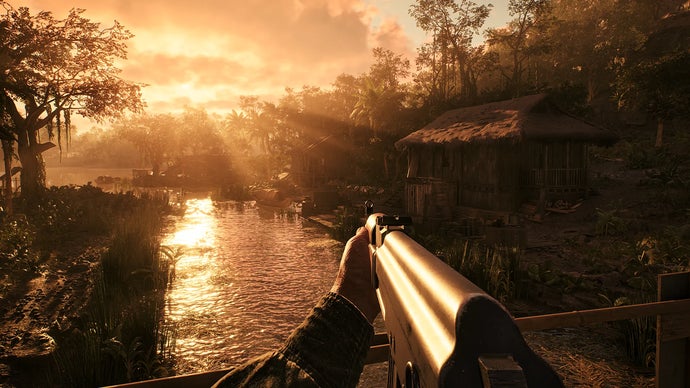
Hell Let Loose: Vietnam review
Hell Let Loose: Vietnam review - Big Walk with guns? Minor Hanoiances. Image credit: Team17 The lavish jungles, rigid command structure, and emphasis on communication make Hell Let Loose: Vietnam a fascinating war simulator when it works. But its many variables can all too easily devolve into a miserable snipe-fest. The most surprising thing about Hell Let Loose: Vietnam is how much DNA it shares with Big Walk. They both frequently involve traversing large expanses of terrain. They both have excellent maps. Most of all, they're both fundamentally games about communication. Each utilises modern voice chat to its fullest extent, requiring players to clearly express and articulate themselves to succeed. The difference is in how they encourage chatty players. Big Walk gently coaxes players out of their shells through the medium of ingenious puzzles and good vibes. Hell Let Loose: Vietnam forces you to chat with your random squadmates because if you don't you're going to get bombed to shit. Where Big Walk is all carrot, Hell Let Loose: Vietnam is all stick, and it will not hesitate to thwack you with it if you don't play by the rules. Grappling with Hell Let Loose: Vietnam can be an intimidating experience. But while its teaching style is much harsher, it does yield rewards. When Hell Let Loose: Vietnam comes together—with dozens of players working in tandem to overcome the enemy—the resulting show is utterly captivating. Unfortunately, it doesn't come together quite often enough to justify the pain of getting to that point. If you've played the original Hell Let Loose, Vietnam basically takes that game's structure and transports it from the hedgerows of 1940s Normandy to the jungles of southeast Asia. 100 players split down the middle step into the roles of US Army squaddies or troops from the North Vietnamese Army, before duking it out for supremacy over lavish maps using combined-arms warfare. Here's a Hell Let Loose: Vietnam trailer to show it in action.Watch on YouTube Unlike Battlefield, one of the most obvious games you could compare it to, Hell Let Loose prioritises authenticity over spectacle (though there is still plenty of spectacle to be had). Often, you're fighting the enemy at such a distance that you'll have to squint to see them, while sprinting around the map on your own will get you killed quicker than roller-skating on the M1.Hence, teamwork is strongly encouraged. Alongside Battlefield-style player roles like medics, grenadiers, etc., Hell Let Loose also employs a rigid command hierarchy. Groups of six players are overseen by squad leaders who can place spawn points to get that squad back into the fight quickly, while each army is directed by a Commander who can call in supplies, airstrikes, and so forth. In the original Hell Let Loose, the Allied and Axis armies played pretty much identically. But Vietnam attempts to fold in some faction asymmetry, reflecting its historical inspirations. The US Army, for example, gets to use helicopters while the NVA don't. But the NVA can build a network of underground tunnels which it can use to fast-travel around the map. 1 of 4 Caption Attribution 1: Explosive moments like this are less common than in Battlefield. But when they do happen, they're bloody terrifying. 2: The jungle looks tremendous, even on my potato of a PC. 3: Maps are large enough that troop transports serve a viable function, though you are incredibly vulnerable when flying in a helicopter. 4: Man, what I'd give for Crysis 4… While there's certainly some specific tactics each army can employ as a well organised team, these asymmetric elements don't make a vast amount of difference to your moment-to-moment experience. What does make a difference over the original Hell Let Loose is the jungle itself.Most maps are covered in whole or in part with dense vegetation, and this can make it extremely challenging to spot enemies. You'll often find yourself crawling through long grass trying to identify nearby enemy positions by the sound of their weapons, and even when fully alert, there will be occasions where you'll almost tread on enemies before seeing them. Further compounding the tension is that Hell Let Loose doesn't explicitly register kills. Unless you're close enough to hear your foe squeal and see them collapse, you might not know for certain whether they're actually dead, which has cost me on more than one occasion. I should also stress that the map design is excellent. Expression Games squeezes an impressive amount of variety from the environments considering they're mostly comprised of trees, rice paddies, and the occasional village. Highlights include Thanh Hóa Bridge, with the titular railway bridge spanning a river that bisects the centre of the map. The mixture of long sightlines on either riverbank and CQB combat on the bridge itself creates some fascinating combat scenarios. I'm also fond of Huế Outskirts, a mountainous area with several industrial zones where elevation plays a prominent role in combat. 1: Take a good look at your enemy, because you won't be seeing them very often. 2: The map is highly dynamic, showing enemy fire locations, recon planes, airstrikes. Even rocket trajectories are clearly visible. | Image credit: Team17 / Eurogamer Importantly, these maps are also large, all of them significantly bigger than Battlefield 6's comparatively hemmed-in environments. Not only does this mean that infantry transport vehicles are actually useful, but it also gives Commanders room to breathe strategically. This is especially the case on modes like Conquest and Domination, where teams need to hold multiple areas on the map at a time to succeed. But even on more linear modes like Offensive—Vietnam's equivalent of Battlefield's Rush—there's no rule against the attacking team setting up spawn points behind enemy lines and using them to stage an assault from the rear.This is why communication is so important in Hell Let Loose: Vietnam, as players need to talk to each other about where enemies are and what they're doing at all times. And when players are communicating well, Hell Let Loose: Vietnam can be fantastic. In one Offensive match where I played as a Medic, we held off the US forces at the first hardpoint, in large part due to great communication from our squad leader. Positioned on the left flank, he accurately called out enemy assaults from different angles, directed grenadiers to destroy enemy armour, and correctly predicted a last-ditch assault from behind. It was inspiring stuff. When players don't communicate, Hell Let Loose: Vietnam is generally less fun. It's still immersive and atmospheric, with napalm strikes erupting across treelines, helicopters whuk-whuk-whuk-ing above you, rockets chasing them through the sky, trailing white smoke. Likewise, it can be a great anecdote generator, like my debut ride in a helicopter ending in said chopper exploding immediately upon landing and killing everyone inside — a more fitting introduction to the game than any pre-rendered cutscene. Extreme rock-pooling, it's the hot new sport! | Image credit: Team17 / Eurogamer But without good team coordination, Hell Let Loose can devolve into a miserable snipe-fest. The game wisely limits actual snipers to a handful per team. But part of the problem is that everyone is kind-of a sniper, anyway. The most basic rifles are effective at medium-to-long range, even on full auto. At its worst, Hell Let Loose: Vietnam becomes a mire of spawn-killing and being repeatedly, instantly headshot without the slightest notion of where it came from. The jungle can mitigate this somewhat, but it can also be a hindrance, as LOD phasing (where level-of-detail is higher for one person than a distant other) may mean you're more visible than you realise at distance.I also think that, as a pure shooter, Hell Let Loose: Vietnam is a step or two behind the competition. Movement is quite clumsy and sluggish. And when you're actually close enough to properly see the person you're shooting at, that interaction is oddly intangible. I appreciate Expression's refusal to use hit markers, which is the sauce-in-a-jar approach to making shooting satisfying. But you do need to find another way to provide audio/visual feedback on kills. 1: Vehicles take some learning to control well. 2: As ever, the medic is a great class to cut your teeth on. | Image credit: Team17 / Eurogamer Finally, emphasis on vocal communication also means you're inevitably exposed to the more unpleasant corners of the Internet. I can't say whether Hell Let Loose: Vietnam's community is more or less toxic than any other online FPS community. I've encountered both angels and demons on my tour of duty, and mercifully you can mute and block individuals who are acting unpleasantly or, as in one instance, watching Formula 1 at what must have been a deafening volume. Did you know the Vietnam War featured live commentary by Martin Brundle? I didn't! At the same time, if your game mandates engagement with other players as part of its design, you need to work harder to foster a tolerant, welcoming community. Because unlike twenty years ago when these large-scale multiplayer games started appearing, I have a backlog the size of York Minster, and there are countless multiplayer games I can play where I don't have to listen to people spout N-words or R-words or do racist impressions of Vietnamese people. I can just leave!Ultimately, Hell Let Loose: Vietnam encapsulates the best and worst of online multiplayer gaming. When it all clicks, I think it's capable of providing more interesting battlefields than Battlefield. But it's also less consistently entertaining than the likes of Battlefield, and you have to work much harder and tolerate a lot of nonsense to reap its rewards. A copy of Hell Let Loose: Vietnam was provided for this review by Team17.
 Eurogamer
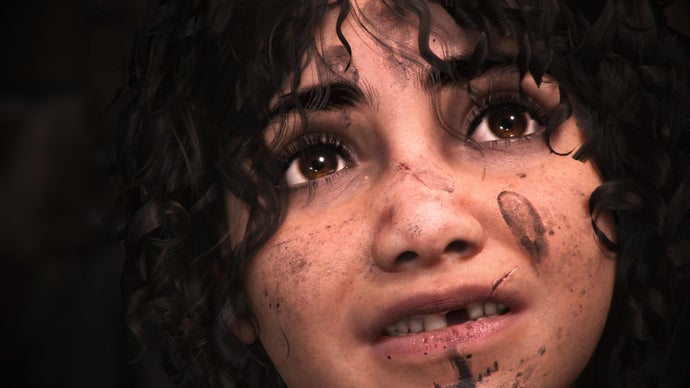
Resonance: A Plague Tale Legacy review
Asobo's prequel adds toe-to-toe combat and hands-off puzzling to the Plague Tale recipe to winning effect – but the trauma porn of its second half takes considerable shine off an otherwise smartly paced action-adventure. Putting 'legacy' in the title of your game naturally encourages considerations about what that legacy might be – and that, in turn, invites thoughts about its identity. (And perhaps 'supremacy' and 'ultimatum' if you're a big Jason Bourne fan.) It might sound silly to say of a game with some of the most impressive faces and places you'll see this – or any – year. But to me, A Plague Tale is spiritually double-A, and I absolutely mean that as a compliment. I find myself instinctively rooting for this series: there is still something of a scrappy outsider quality to it, even as the credits list appears to lengthen with each release. Maybe it's partly because Asobo doesn't have the budget or personnel of games from Sony or Microsoft's first-party stables – or any of the other megapublishers, for that matter. But it's mostly because it features the kind of design and narrative choices I sense would be sanded down or cut entirely from the bigger-budget crowd it clearly wants to hang out with. Let me tell you about one in particular. Walk towards one of the many big, ancient doors in Resonance, and you'll see a tiny circle appear. Get closer and it'll become a button prompt, telling you to press... guess. No, not that one. Not that, either. Nope. It's R3! That's your all-purpose squeeze-through-gaps button, your crawl-through-narrow-holes button, your investigate-trinkets button, your insert-spherical-key-into-receptacle button. Even your pick-up-and-throw-dropped-knife-at-advancing-enemy button. Which sounds mildly unhinged, but somehow fits this game perfectly. That's the double-A spirit right there. Three games in, and A Plague Tale has yet to fully settle into an identifiable groove, which I find similarly cheering. The first game was a smartly told, really well-paced narrative-driven action adventure with admittedly rudimentary forced stealth, though that simplicity helped me relish something that usually makes me sigh: I never quite tired of clonking hapless enemy soldiers on the head and watching rats gnaw them to bones in seconds. For 2022's Requiem, Asobo expanded its action and stealth palettes, and the boundaries of its environments. But the pacing suffered, and the sequel lacked some of the first game's twisted humour, particularly in its wearyingly grim and maudlin closing stretch. In any case, both had things to admire: there was a sense of a studio trying on borrowed ideas for size, seeing which ones suited it most, and finding shrewd twists on some of them to make them its own. Here's a trailer to show Resonance: A Plauge Tale Legacy in action.Watch on YouTube So it's wholly fitting that the third game should focus on a plunderer, and a character we're already a little familiar with. Like the De Runes, Sophia also had a pretty unhappy childhood. As a youngster, a group of nuns subjected her to some nasty experiments (as nuns do). She's eventually rescued by her father, and finds a home among his gang of ruffians and thieves, whom you get to meet and greet in a charming early sequence that effectively doubles as a tutorial, and whom you instinctively know are unlikely to make it to the credits. Or, in dad's case, to chapter two. No sooner has his right-hand-man Faro taken over than the bandits suddenly find themselves under attack. Faro smells a rat – though Asobo calls this mystery traitor Viper, presumably to avoid reminding the player of the conspicuous lack of rodents. Escaping alongside fellow thief Leni (the two were definitely roommates), Sophia sets sail for the Minoan island where her father perished, the Viper's cohort hot on their heels.Despite her career path, Sophia turns out to be rather less sneaky when dealing with human threats than Amicia. Instead, we get a new ingredient to Plague Tale's work-in-progress recipe: sword combat. Despite the almost total absence of stealth kills, I was reminded of Sucker Punch's Ghost duology in these skirmishes, with perhaps just a pinch of Hellblade – though Sophia's a markedly more flexible, agile fighter than Senua. There's a detectable but curiously endearing clunkiness to how the inciting incident plays out: a reminder that Asobo doesn't have the resources of a Naughty Dog but is determined to try to match it anyway. | Image credit: Focus Entertainment / Eurogamer In an attempt to fit in with the triple-A cool kids, Resonance has brought a parry mechanic to the party; enemies, as is likewise de rigueur, have a poise meter of sorts. But while it certainly helps if you're good at pressing the left bumper at just the right time, it's hardly essential. You can invest Resonance points – shiny objects you find on your travels or are awarded after certain encounters – on specialisms. So if you're not fond of parrying, Sophia's dodge can quickly be expanded into a double dodge. On the other hand, if you're really good at it, you can opt for a shorter parry window for greater stun power. Rather than having to commit to a specific branch of a lengthy skill tree of incremental boosts, in other words, there's a handful of meaningful improvements in different areas, and you can respec at any time to suit your preferred approach. Lovely stuff! Sophia's kick, for instance, can be followed up by a second, and booting enemies into scenery and one another can easily open them up to a damaging charged stab. That in turn can be boosted to absorb a yellow-flashing parryable attack or a red unblockable one. Each skill has one of two options for mastery: I plumped for a double-dodge that makes you almost invincible for its duration, but could have gone for the riskier one that sees Sophia swing her blade to deal a bit of bonus damage as she spins on her heel. 1: Asobo's camera gets closer to its subjects' expressive faces than most games – which is considerably more "cinematic" than a oner from behind the protagonist's shoulder. 2: Lisa Delamar's Leni is very much of the Chloe Price school, which is to say she and Sophia are an obvious couple with the patina of plausible deniability for the determinedly heteronormative. | Image credit: Focus Entertainment / Eurogamer Even if combat isn't really what I'm looking for from a Plague Tale game, I never found my eyes rolling like Sophia's when a new group of enemies showed up. It's bolstered by an appealingly boho perk system, too: arm bands and beads and bangles that might, say, increase your chance of dodging an incoming arrow or of surviving a normally fatal blow. (Sophia lives a charmed life, you might say.) In another neat touch, these items are physically present throughout, even if you may wonder how they're staying on Sophia's person through the more gruelling trials. In any case, it's a neat incentive to pick each area clean.When it comes to exploration, Asobo turns its magpie eye toward Tomb Raider – and, at least in a mechanical sense, it's more old-school Lara than her rebooted counterpart. It offers you daringly little guidance in places: there's no map, and the hint system not only makes you commit to holding down a button for help, but only gently nudges you in the right direction when you do. In the game's middle act in particular, it's not afraid to let you get at least a little lost, or pleasantly stumped when the way forward isn't immediately apparent. As with most ancient civilisations, the Minoans were evidently fond of light-reflecting puzzles, and Asobo's banking on you feeling similarly; the ones here are mostly enjoyable, even if I would probably take issue with the Steam blurb's description of them as "ingenious". In any case, the payoff is always worth the effort: long-dormant mechanisms that rumble and clank to life at the player's prompting would be among my personal picks for joy-sparking video game things. Resonance certainly gives good vista. It's worth trekking to the edges of the shore, incidentally | Image credit: Focus Entertainment / Eurogamer I'll add another to the list. Periodically, Sophia will scribble down environmental clues as she happens across them, a cute touch which I think has been lifted from one of the Uncharteds – itself a practised pilferer, of course – and makes me wonder if Asobo considered subtitling this prequel A Thief's Beginning. On the notebook screen, you can guide her hand across the sketches and tap them with her index finger for an observation that may just nudge you in the right direction. (Should she tire of the plundering life, incidentally, Sophia could definitely have a lucrative sideline as a hand model; these are not the digits of someone who has seen the amount of combat and rock climbing she has.)For me, Resonance peaks in its first half, particularly during an extended bit of puzzle-led exploration punctuated by trap-filled challenges and the odd enemy encounter. Here, Sophia and Leni have an extended back-and-forth about what they're going to call the boat they're going to sail around the world in together. That these exchanges come between pockets of action where they're brutally stabbing and slicing groups of big lads to death is weird but deeply endearing. Actors Anna Demetriou and Lisa Delamar maybe relax into this couple-y conversational mode a little too much, not least because these two hardscrabble bandits sound as well-heeled as the De Runes. "Even the mosaic reminds me of San Marco's!" chirps Leni at one point; close your eyes and it could be a couple of Made in Chelsea cast members discussing their favourite trattoria. Flashbacks to bouts of gladiatorial combat tacitly suggest Sophia is a superior fighter to one of mythology's most celebrated warriors | Image credit: Focus Entertainment / Eurogamer Asobo inevitably steps away from these sun-kissed exteriors and the levity of these mildly sociopathic interstitial chats, revealing it has plenty of dark secrets tucked in its back pocket. As Sophia descends deeper into the ruins, the visions she had as a kid become more potent, transporting us back in time, and to a mythic figure with whom she shares an unlikely connection. And there's a much deadlier threat here, one even your armoured rivals are ill-equipped to handle. Here at last comes some tense sneaking, since this terrifying foe is attracted by both sudden movement and noise, albeit staved off by light – though sometimes you'll have no choice but to run, and squeeze through narrow gaps. If R3 isn't quite enough to make that triple-A staple feel fresh, it's deliciously horrible when the 'walls' are actually corpses; more so when those corpses start to twitch. There's a delightfully unpleasant conceit that gives whole new meaning to the phrase "loud enough to wake the dead", and a new type of enemy that nods to Resident Evil 4: never a bad place to borrow from. Olivier Deriviere's score is always worth a nod, frantic strings and thudding percussion vying with authentic, mournful Greek-Cypriot vocals. | Image credit: Focus Entertainment / Eurogamer Even as it tries to mix things up, though, Asobo makes the same mistake as it did in Requiem and ladles on the trauma in great heaping portions. You'll regularly make your way through artfully horrible tableaux of corpses – from the recently departed (and, indeed, de-parted) to the more desiccated variety, locked in permanent grasping distress. There are sights here that Hieronymous Bosch might well declare a "a bit much". Granted, you don't go into a game with 'plague' in the title expecting super happy fun times. But what felt impressively pitiless (and occasionally blackly comic) in Innocence becomes a full-on descent into abject misery.And sure, you might think one of the things that defines a Plague Tale game, beyond that double-A-ness (don't say it aloud), is its bleakness. But then it's hardly alone in that regard. I'm not especially squeamish, but I do find it strange – not bad, just odd – that so many mainstream third-person action-adventures feature levels of horror and violence you'd ordinarily associate with extreme cinema. Though I have less of an issue with that than with how many of these games put women through hardships that seem to go a step beyond what is typically inflicted on male protagonists. Senua, Lara, Ellie, Abby, Amicia and now Sophia: I am growing slightly weary of seeing lingering close-ups of the faces of deeply traumatised, grief-stricken young women, streaked with tears, sobbing or screaming in physical or emotional agony. Demetriou lets out one particularly haunting shriek that I hope for her larynx's sake required only one take. Again: a bit much. 1: A hat-tip to Benjamin Homewood as Faro, whose appealingly complex relationship with Sophia is the game's secret heartbeat. 2: In hindsight, this sphere would have been enormously beneficial in Requiem. As, for that matter, would a heads-up about the origin of the macula. Cheers, Sophia. | Image credit: Focus Entertainment / Eurogamer As in Requiem, Resonance really puts its hero through the wringer in the closing stretch, and at times it feels like we're being invited to share her pain. If you know your mythology (or have been paying attention during the early flashbacks) you'll know where this is going to end up. Any concerns that the presence of an environment that gave us the word 'labyrinthine' mightn't pair well with Asobo's desire to deliver a well-paced action-adventure that doesn't hold your hand too tightly are borne out. There's one sequence in particular that falls squarely between two stools: apparently torn about how much visual guidance to give you, it alternates between too much and none at all. And yes, that it's a bit of an ordeal is at least somewhat intentional. But were you to play a drinking game for each time Sophia says "I need to end this" or "this ends now" or variations thereon, you'd also fall short of the credits. (Note to developers: if your protagonist keeps yelling things like "No, not again!" or "I've had enough of this!" there's a greater-than-zero chance your players will feel similarly.) As Sophia collapses and slowly gets to her feet for the umpteenth time, a voice telling her "it will soon be over" feels more like a reassurance to us than her.I might be labouring the point – though forcing you through an arduous final act would be the most fitting way to wrap up this particular review. But I can't overstate just how much it took the shine off a game I otherwise largely enjoyed. There's a bittersweet irony to the fact that, in a game so focused on refraction puzzles that its protagonist is moved to comment on their prevalence, its story would have benefitted enormously from just a little more light. A copy of Resonance: A Plague Tale Legacy was provided for this review by Focus Entertainment.
 Eurogamer
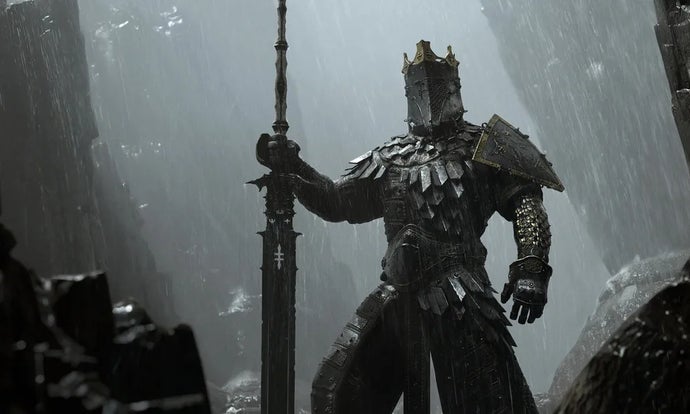
Mortal Shell 2 review
Mortal Shell 2 grows in stature and self-assurance from the first game, establishing itself as an excellent Soulslike with a rhythm of its own. In the increasingly crowded Soulslike genre, a game's opening minutes need to do a lot of work. The good news for Mortal Shell 2 is its opening is superb, starting as well as it continues, and condensing the magic of its next 30-odd hours into a few minutes with aplomb. It starts with your character being woken up by a whisper, before a talking crow with a human skull (Souslikes!) sets up the mystery: telling you you're not from this world, and that the people you're about to meet aren't like you. You walk through what initially seems to be a normal village festival. The atmosphere is joyful; music is playing; little boys and girls are singing; a woman invites you to a dance. Listen closely, however, and you quickly realise this is more like something out of Midsommar. Everyone is talking in hushed tones about looking their best to "meet Mether". The road through the village ends at a pyre, where it becomes clear exactly what type of festival this is. The festival ends the way you expect, my character has a moment with said Mether before grabbing an oval-shaped egg and heading off. This is when Harros is re-introduced; a returning Shell from the first game. After embodying it, you're set on your way into an open section, where Mortal Shell 2 gets to brilliantly demonstrate its biggest strengths. The grounded, brutal combat, the lack of a stamina bar, your Shell ability, the forgiving parry timing, the Resolve mechanic and its new sidearms. It's a brilliant teaser, by the end of which I'd fought countless enemies, defeated multiple bosses, and felt the weight of combat as everything clicked into place. It also demonstrates a level of confidence that was clear to see across the rest of the game, and that's nowhere more clear than with the prologue's end, where Mortal Shell 2 emphatically cuts ties with the original. Here's a Mortal Shell 2 trailer showing it in action.Watch on YouTube The original game felt like an indie take on Dark Souls 1 - its pacing in particular - though without the RPG mechanics. Combat relied on the same stamina-bound rhythm typical of classic FromSoftware games, so it felt familiar. But the first Mortal Shell introduced its own ideas too, almost as if for an audition for a seat at the Souslike table. Much of it was a clear first attempt, but it came with a demonstrable passion. The headline addition was its Hardening mechanic, whereby you could turn into stone at the push of a button rather than block. If you weren't attacking or managing stamina, you were waiting for the right moment to Harden.And with that there were some drawbacks. The game only had four Shells, and each mapped to an RPG archetype, which felt like a compromise an inexperienced indie team might come up with to make their game stand out. There wasn't a lot of depth, and the game seemed to almost run out of steam in its final third, with vastly underpopulated areas and a sudden difficulty spike. But I couldn't help but love it for earnestly attempting to advance the genre, even if technical shortcomings and a lack of polish also got in the way. 1 of 4 Caption Attribution Against that first game, Mortal Shell 2 is a highly accomplished sequel - one that could arguably earn a spot amongst the great Soulslikes. Everything has been overhauled, with aspects either replaced with something that fits better within the sequel's updated designs, or refined to reach the potential its progenitor couldn't. Perhaps that's why the game is positioned as a standalone sequel. It takes place in the same general world, brings back some of the original's Shells, but doesn't go beyond making rare nods for the lore fiends.The setup is entirely separate and easy to follow. The Undermether is a god of unknown origin forced to crash-land in the realm after a foul creature latches onto her. The Mether was carrying many eggs (Ova) within her, and, in seeking shelter amongst humanity, they have been stolen. Many have been corrupted, but a few unspoiled Ova remain. You are her child, a Harbinger, hatched out of one of the untainted eggs bearing immense power. Your goal is to bring back your stolen kin. Though you can hold your own in that skeletal form, you're driven to find a Shell to embody. The narrative unfolds through interactions with the different factions that sprung up around The Mether's arrival, and through her devoted servants - who take shelter in a keep carved from her bones - which also acts as your hub area. The other part of the narrative is the personal stories of the Shells, the vessels you inhabit. Image credit: Cold Symmetry, Playstack. Like the original, Shells are what you'll embody for the entirety of the game. You can switch between them as you like, but I stuck with one for most of my time. Shells don't offer any perspective of their own, but they all have stories of what they were before, and they sometimes intersect with the A plot, though not enough to give it more depth. Every Shell is based on someone who lived somewhere in the world at some point. By increasing your bond with them, you uncover more of their past and unlock more of their abilities.This is an area where presentation is drastically improved over the original, with playable vignettes rather than simple memoirs read by the character. You may end up seeing only a few of them, however, as the resource associated with bonding is rare. Over the course of my playthrough, I ended up unlocking one or two memories for most Shells while only fully bonding with one. Combat in Mortal Shell 2 flows faster than many of its genre contemporaries, in part because, unlike its predecessor, there's no stamina to worry about. This encourages aggression, and the game uses it to fuel its Resolve mechanic - a resource spent on powerful character abilities and as ammo for ranged sidearms. The more of your melee attacks land, the more Resolve you generate. Image credit: Cold Symmetry, Playstack. This is the single most impactful change from the first game, but I was initially worried it would turn combat into a race of attack spam, taking away the considered approach the original handled so well. You can technically never stop attacking, but enemies in the sequel are designed to work around that and force you into a particular rhythm. They're more resilient, don't stagger easily, and often come at you in groups. The rhythm, then, is a flow of prioritising threats, managing crowds, and finding the right window to unleash your Shell abilities.Though the sequel's pace may not be as deliberate, attack animations deliver the same tactile heft the original was known for. Hits stagger enemies and visibly scar their bodies as they land. I used the Veteran's Battle Axe for most of my playthrough, which is notable as I rarely pick heavy weapons in those games. Perhaps I simply couldn't get over how a horizontal swing at an enemy with low enough health can chop their head clean off. Mortal Shell 2 has plenty of Souls-y elements, but it's an action game first, and it commits to that track far more than the original's somewhat wishy-washy design. This isn't a game where you're going to study a character sheet or hoard an arsenal of 50+ weapons, most of which never get used once. There's only a handful of weapons and a few authored character classes, each specifically tailored for a certain style. It's a tight focus that gives them all a character, with bespoke animations and unique moves. Image credit: Cold Symmetry, Playstack. The eponymous Shells, meanwhile, are far more important to gameplay than they are to the narrative. You can think of them as the pre-made classes from the start of a FromSoft game, except each one has a unique ability or two, and underlying stats that support that - even if the game never exposes those numbers. Some are clearly better at resisting certain ailments, for instance, or have bigger health bars than others, just as another's lighter frame is designed for players who like dodging.Most of my time was spent with Eredrim, an absolute unit of a man whose main ability is to shoulder charge enemies to stun them, opening them up for a follow-up attack. I foresee him being the 'easy mode' Shell, in part because his supporting ability also happens to be excellent at crowd control, interrupting enemies who get close enough to surround him. He also has a vast health bar that fits well with that headbutt-first-ask-questions-later approach, and the attire to match - a chainmail covered in metal scales with plating underneath, an angular helmet shaped like a fortress, and large pauldrons that make it hard to believe he's not from Warhammer. If you take enough damage and your Shell's health reaches zero, you simply get knocked out of them, giving you a second chance in every encounter. You can return to your Shell by landing melee hits on enemies - but crucially not ranged attacks. There's no limit on how many times this can happen, except for the fact it takes longer and longer to return to your Shell each time you're kicked out of it. Your Harbinger - the thing that embodies the Shell - can be levelled up, and each level comes with boosts here and there to your Shell. You don't control which stats to level up - everyone's level 50 Harbinger will look the same - however, your late-game Shell build will differ greatly from mine. And notably, build variety is what perhaps received the biggest upgrade in this sequel. There aren't just more options (eight compared to four); each Shell's skill tree is deeper, offering meaningful bonuses for players who want to laser-focus on a certain style, and enough varied options for those who want a more generalised build. Image credit: Cold Symmetry, Playstack. Shell skill trees can be altered at any Beacon (bonfire) to fit the situation. For instance, you can allocate points in fire resistance before fighting a boss who sets everything on fire. After the fight, you can refund those points and use them elsewhere. Your choice of Shell is what ultimately dictates how you're going to be playing the game, as you can't change their inherent stats or abilities, even if you can take them down differing paths.Shells are clearly where a lot of developer Cold Symmetry's creativity went. Their abilities are built on some clever ideas that change up gameplay in ways that were genuinely a joy to witness. The most interesting - and most technical - is Smert, who stops time and bare-handidly attacks enemies to apply stacks of random afflictions that detonate when time resumes. I couldn't get into the right flow with them to make them my main, but I was certainly taking notes for the future. Most Shells have to be sought out, hidden across the game's world. If you're happy to explore, you'll find them organically, but you can also spend a rare currency to learn their approximate locations instead. The same is true for most weapons. I was happy to scour every inch of the world over the course of my time, so I enjoyed the hunt. That world, meanwhile, is one of those that's being increasingly called a 'wide linear' one. The world is open: you can run from one edge to the other, but not without going through teleportation gates, bridges or other connecting bits that break up the scenery. I initially felt those were simply a technical compromise to prevent asset streaming issues, but I ended up liking them; they made the world feel like it's built from authored regions, rather than one big plot of land. Image credit: Cold Symmetry, Playstack. The world is large enough for you to sometimes feel lost, but as with the hunt for new Shells, my sense of curiosity was often rewarded with items and other discoveries almost everywhere I ventured. Most of what you see as you explore admittedly doesn't rise to the level of, say, Elden Ring, but I got distracted by strangely-shaped objects in the distance plenty of times, forgetting what brought me to that area to begin with. My only real issue with the game's world is the inconsistent placement of Beacons. Sometimes you come across multiple in a small area, other times you die and realise it'll take you minutes to get back to your corpse.Seals, meanwhile, are another mechanic that adds a layer of agency to how you play. This is an example of an idea that started out in the first game as a basic feature that's now been expanded to become a new pillar. Seals are usable with or without a Shell, and they replace or augment what your block button does. For instance, the all-rounder keeps the block, and adds a parry if you time your block right - pretty straightforward. The Infinite Seal, however, removes the block entirely and tightens the parry window, but each successful parry is far more powerful as a result. A third replaces your block with the ability to turn into stone, a nod to that core Hardening mechanic of the original game. I should also touch on Tarstones, an element that further boosts customisability in combat. These are essentially infusions, except detailed enough to force you to think carefully about your choice of weapon and sidearm. A minority is basic, applying elements to your weapon or adding passive buffs to your character. Most, however, can change attack animations, augment your weapon with new moves, or deliver the missing piece to complete your hyper-specific build. Not all Tarstones work with all weapons, so this isn't a flat buff everyone gets. Some of their descriptions were so intriguing I often switched to a weapon they support just to see the effect in action. And you better believe a few ended up in my notes about certain build combinations for my next playthroughs. It's that wealth of intelligent design decisions and well thought-out features that creates the best moments of this game, and it's why - despite not having the build variety of a typical RPG - Mortal Shell 2 has plenty to convince you to start a second and third playthrough. Image credit: Cold Symmetry, Playstack. The most underwhelming part of Mortal Shell 2 is unfortunately its boss fights. Across the open world, there's a dozen or so encounters with what are essentially recolours and beefed up versions of existing enemies. Those fights are often bland, and I struggle to recall the majority of them. The real disappointment are the main bosses, of which there are six. Their designs may be eye-catching but they lack the grace and grandeur of even the least-memorable FromSoft bosses. My favourite is a toad-shaped boss whose ranged attack is… firing off a torrent of feces at you, which poisons you if it connects. Giving a new meaning to the phrase 'getting shit on'.Part of that lack of memorable moments is the hurried presentation for the major bosses. Each gets a brief intro, but no opening speech and no unique boss theme. It made most of the fights feel devoid of the spectacle you'd expect. They also aren't challenging, and it's mainly because they simply don't have enough attacks, and so end up just rotating through their two or three major moves while you wail on them - a test of your mechanical prowess these are not. This is sadly a problem that can't be solved by simply making them hit harder - that would only exacerbate it. Incidentally, that was one of my problems with the first game, too, but that game's disarmingly amateurish air and first-timer approach to solving design problems made it harder to judge it too harshly there. Image credit: Cold Symmetry, Playstack. As for the technical side, though far more polished than the original, Mortal Shell 2 still isn't quite as polished as I want it to be. The review build took several patches during my time and each made things better, so I know polish is something that'll continue to improve. Indeed, a sizable day one patch arrived alongside advanced access on 17th August. I do, however, still have to highlight the issue. Great Soulslikes strive for integrity in their difficulty. There were several moments where I wasn't sure whether the enemy or boss' attacks never gave me an opening because it was bugged, or because I needed to get better at reading it. Reattempting the fight proved it's the former in the majority of cases, and reassuring as that might be for my own skill, that's not something you want to have to worry about.Those issues aside, Mortal Shell 2's greatest triumph is realising the ambitions of the original game. Its lauded combat is further expanded through new weapons and inventive sidearms. The world is denser, invites poking around its many nooks and crannies, and offers plenty of opportunities to experience the game's best moments. The narrative is more direct without fully tipping its hand too early, even if its boss fights didn't move me, be that to scream at my TV in anger or tear up at some of their melancholic origins. The good news is issues of polish are easy to forgive when the game feels as good as Mortal Shell 2 moment-to-moment, and those bosses are only an isolated part of the experience overall. As a sequel, it delivers on practically every front. As a standalone action game, it has plenty to offer Soulslike fans - and really anyone eager to dig their teeth in a meaty game from a developer punching above its weight. A copy of Mortal Shell 2 was provided for this review by Playstack.
 Eurogamer
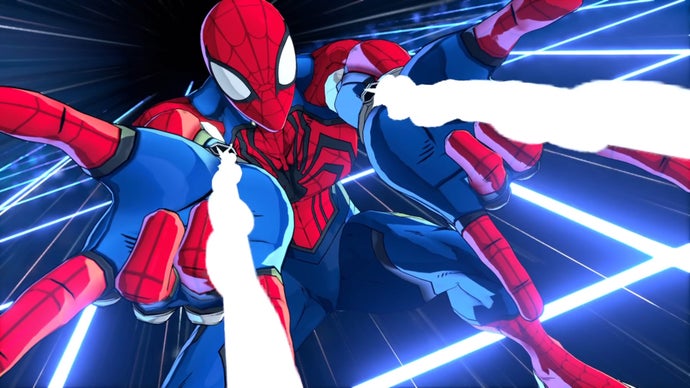
Marvel Tōkon: Fighting Souls review
Marvel Tōkon: Fighting Souls is a smart marriage of classic tag fighter staples and modern design, creating an excellent fighter anyone can enjoy. Whenever I see the words "spiritual successor" attached to any new game, I immediately get concerned. You set a bar in the minds of old fans that can prove impossible to reach. This is not the next great Marvel vs Capcom game. It's not a Marvel vs Capcom game at all, in fact. It is, however, the best tag fighter I've played in years. But first, what do you get in the box (for now). Marvel Tōkon: Fighting Souls? It's a 2D, four-vs-four tag fighting game, meaning you get to pick a squad of heroes and villains from a cast of 20 and slam them up against other teams, either online against other players or in a scattering of single player modes. There are training options, some basic account customisation: it's a pretty standard package all things considered. Where Marvel Tōkon immediately stands out is through its stylisation. We've seen a lot of Marvel games over the years, ranging from MCU film tie-in sludge and authentic comic book adaptations. The Tōkon team have instead presented the Marvel universe from a Japanese lens, redesigning characters and in a way only Arc System Works could do. This was a brilliant decision to make. It sliced through any sense of super hero fatigue I had, even for the blandest on the roster. Here's a Marvel Tōkon: Fighting Souls trailer to show it in action.Watch on YouTube Take Captain America. I think Captain America - generally speaking - is fine. He's a good dude with a cool shield, wicked. If you love that, great. His Marvel Tōkon look is faithful, though refreshing in the little ways. The styling of the A and wings on his helmet, his battle boots paired with the thick jacket. It's a great look, that .When this approach is applied to characters we don't see too much of, the pay off is even greater. Green Goblin is the stand-out example of this to me, a freaky mess that creeps around on the ground and soars menacingly on his glider. Looks aren't everything, but with Tōkon they count for a lot. And, as a side note, I do love how Arc System Works have drawn comic book aesthetics throughout this game. Oftentimes this isn't obvious, instead playing a role in the background, but I believe it makes the game a more colourful, joyful experience. Panel frames line the parameter of menus, boxes you hover over pop with an always-moving uneven orange pencil fill. You've even got this brilliant retro dotted texture on sub-menus. It's incredibly nerdy to care about this stuff but I don't care, it's wonderful. But it's in the playing where Tōkon is a real treat. Marvel Tōkon blends decades-old tag-fighter staples with modern-age genre trends beautifully, combining the most compelling aspects of what is often considered the most daunting sub-genre with advancements that lessen the barrier-to-entry, while preserving the wow factor. Though there is a cost to this. What's the cost? Well, Marvel Tōkon is not as fast and loose as its peers, nor its spiritual predecessors. Compared to classics like Marvel vs Capcom 2, movements can at times seem tectonic, and the combat in Tōkon has been clearly designed with a certain way to play in mind. A basic combo route on one character will likely work on all of them, and early on its true characters at their core felt a touch samey.This feeling gradually falls away though, as each fighter's individual strengths open up avenues for unique and tricky combos that - while not necessarily as mechanically impressive as similar feats from past games - do tickle the brain stem. Indeed much of the mechanical freedom and complexity oldheads would recognise from tag fighter classics has been sliced away here, in favour of wider appeal. 1 of 4 Caption Attribution As for what it gets in return, Marvel Tōkon is an easy game to pick up and play, and it has the capacity to enchant you thanks to what I believe to be the best onramp for new players I've ever seen in a tag fighter. It's so smooth you hardly notice it, the gold-plated Gillette razor of the genre.You start by mashing buttons as you navigate yourself around the cast, getting to learn the basics of each character. Then you start pressing the assist button to fold in tag attacks into your game plan, then maybe you try a basic combo manually: light, medium, heavy, down heavy, jump medium, heavy, heavy, assist, super. Easy-peezy, and it works with every character. Then hey, why not try and extend this combo with one of those assisted attacks I tried? Oh, what happens if I add this, or that? It all comes naturally. Unlike other games like Street Fighter 6 or 2XKO, which lock those using basic controls away and separates them from other players, Marvel Tōkon gives you one method of control that supports both high-dexterity players and those just starting out. It's fun to try out a new character, because it's easy to try out a new character. The barriers are removed, and replaced with an elegant staircase anyone can ascend. It's remarkable because a 4v4 tag fighter should be a horrendous mess. Visually, sometimes, it is. You gradually unlock your whole squad during a match, be it through knocking an opponent through a wall or losing around, so eventually matches can become this motorway pile-up of swinging-swords and fire blasts. But here's the thing, you're not thrown in there from second one. The process of unlocking these characters as the match progresses allows you to gradually build up to the chaos. Each match, as a result, has a natural climax on the final round, a big crescendo to a comic book brawl. It's great stuff, really. As for where you can actually use your newly mastered combos, there's not a huge amount present. There's more to do than in some of its peers right now, but this is still a game where the vast majority of your time will be spent online fighting other players. There are five single player episodes, each featuring a different team of characters. They aren't especially long, nor really challenging, but they do come with a mix of nice cinematics and comic-style animations. You can beat each episode in around an hour, but doing so once will reward you with a new character. Remember when games used to do that? 1 of 3 Caption Attribution There are also some alternate modes that offer distractions from the meat that is the online suite. Arcadia Rumble is this basic party game mode that pushes you to slap other avatars for in-game boosts before jumping into proper matches with the bonuses you've acquired. It's not competitive by any means, and it struggled to keep my attention as a result. There's also various arena courses, small choose-your-own-adventure arcade ladders, and a 100-round survival mode that rewards those strong enough to go all the way with a special colour scheme for the whole roster. Again, remember when games used to do that rather than selling everything to you?The online offering is where you'll inevitably wash up, and I found it largely faultless. The basic pairing of casual and ranked matches can be found here, though the Arc System Works special is also present: avatar lobbies where cutesy versions of the roster can be controlled by the player, and navigated to arcade cabs where other players are doubtless waiting for you to hop on. This is a nostalgic addition that appears to be a mainstay in modern fighters, even as I have to wonder: how many new players have actually seen (let alone played) a fighting game on an authentic cab? I do appreciate a dedicated online tournament mode present on the main menu, which allows players to hop onto official PlayStation tournaments for Marvel Tōkon. While I do believe leaving your house and finding a local event is where the soul of the genre still thrives, I also appreciate that most new players aren't going to want to do that right away. It is probably better to offer an avenue for competitive ambitions people can engage with at home, if only to tempt them to social spaces later down the line. Performance problems have been widely reported since the release of Marvel Tōkon and for good reason, the PC version has appeared properly borked. For this review I played on PS5, and so the hardships of PC players wouldn't usually be within the remit of my review. However, due to the particular nature of the technical problems present on PC while I was reviewing the game, online matches against PC players were dreadful. Thankfully, other PlayStation 5 players and I were able to turn crossplay off and essentially lock the PC playerbase in a quarantine zone where they could fester away, resulting in a near-flawless online experience. 1 of 5 Caption Attribution Nonetheless it did have a negative impact on my experience with the game. A patch has come through which has appeared to largely remedy the problem, though this is of course anecdotal. Having turned crossplay back on and courageously interacted with PC players I have found a few of them still struggling so much it's as if playing from Wii U game pads, and as such have felt tempted to scurry away back to my gated community. A problem that, hopefully, will continue to improve in time.On its own, in an empty room divorced from the legacy of Marvel tag fighters, Marvel Tōkon is a fantastic game. I do still feel the ghost of the Marvel vs Capcom series floating over this game however. Perhaps unfairly, it's a series I can't help but compare to Tōkon often. I do find myself missing the speed and complexity of those games. For better or worse, I don't think some of the ridiculous feats the series is known for are possible here. But maybe that's for the best. I'm reminded of the differences between film and digital photography a little. People today still swear by film, the hurdles you have to overcome to become proficient with a film camera are extensive, but through practice some truly fantastic shots are possible. Digital photography made things more accessible, it made taking great shots easier and you don't have to struggle as much. With ease of use you do lose something. Control is taken from your hands, lighting is taken into account for you, and in exchange the chance of getting poor shots decreases. Even so, there's something special about having to manage all this yourself. The photograph you take on film is your own, the product of unbound freedom and hardship. I couldn't crack film photography, and retreated to a digital camera, but I get why people stick with the old stuff. I believe with Marvel Tōkon, older fighting game fans may be in the same position. It's a hard thing, but time moves on and maybe dropping some of the hardship from Marvel tag fighters is for the better. Because Marvel Tōkon is a triumphant new addition to the legacy of Marvel tag fighters. It's a bold game, keen to match fantastic presentation with explosive fighting that's found a well-earned spot on my weekly rotation. One I think it'll keep for a long time to come. A copy of Marvel Tōkon: Fighting Souls was provided for this review by PlayStation.
 Eurogamer
Fields of Mistria review
Fields of Mistria review - feeling at home on the range One in a melon. Image credit: NPC Studio. NPC Studio delivers a community-bonding experience and the chance to live out your Sailor Senshi dreams, all from the comfort of the farmstead. It's 1:50am, and a purple cat throws several logs of wood at my head as I run to bed, exhausted from a long day battling sentient lanterns in the mines. At 6am the grind begins again, but not before a morning chat with the amnesiac dragon statue who lives down the garden path. It's a hard life for adventurers in Fields of Mistria. It's even harder as an adventurer-turned-farmer, because alongside fighting monsters underground and learning the secrets of dragon magic, the local feudal lady has put in a request for relief crops. As your new homestead was granted in exchange for your help, it's time to hang up the greaves and get growing. I plant a dozen turnips, buy a pair of chickens and then get back to business: digging up treasures to gift to the hot witch running the town's bathhouse. Released last week after two years of early access, Fields of Mistria promises to be a spiritual successor to the farming sims of the late 1990s. And it's true that the game's initial premise feels like the classic Harvest Moon formula: turn up and revitalise a struggling town, winning hearts and rosettes along the way. This is not the first time a modern farming sim has reimagined that idyllic take on rural life. Unless you've been living under a rock - perhaps in the mines - then Stardew Valley is the most famous example, exploring countryside living through a Pacific Northwest lens, but there are plenty of other games coming out right now that want a slice of the proverbial prize-winning pie. Here's our old friends from the former video team talking about the wonderful Fields of Mistria.Watch on YouTube Almost immediately, however, Fields of Mistria proves itself to be a different beast. In the first place, it's very relaxed about the actual farming. Anyone who says farming sims are inherently cosy hasn't run a ranch with the spirit of an agricultural megacorporation. In many cases, Stardew Valley included, the game becomes less about learning to live alongside nature and more 'how can I make more wine than god.' Move over Del Monte; give me fifty hours with a plot of land and I will show you the meaning of monoculture.The world of Mistria is resistant to that impulse. There are real, incentivised reasons to try a bit of everything, from fishing to farming to pissing off the blacksmith by making better swords than him. Caldarus, the aforementioned dragon statue, offers perks in exchange for essence gathered through your efforts, so it's good to diversify what to work on day to day. Sometimes that means exploring the mines until the last possible moment. Sometimes it's clearing rubbish from the farm in order to build a cow playpark. The game treats both as equally valuable, preventing it from the automation trap many farming sims can fall into. Yeehaw! Seesaw chickens. | Image credit: NPC Studio / Eurogamer In fact, for a game set in a fantasy world of witches and positive relationships with the gentry, Fields of Mistria adopts a surprisingly grounded approach to what your farm can do. Yes, there is a spell to summon a storm and water the fields, but the crops themselves are familiar. Unlike in Story of Seasons: A Wonderful Life, your farmer doesn't spend their time tending to bluenanas or cursed turnip / melon hybrids. There are only a handful of different crops per season and they're all rather sensible; Mistria is going to be saved through the hauling of good old fashioned corn and potatoes, though you can forage and grow herbs if you're feeling fancy. If anything is fantastical it's the local flowers, but even they are based on real-life equivalents. The ranching mechanic continues this trend towards realism. Alongside cows and chickens the farm can house horses, ducks, sheep and alpacas (and capybara, for extra cuteness), setting it apart from many other fantasy farming sims, who often tread the path of unusual or exotic creatures. Fields of Mistria sticks to pink chickens. Or colour-shifting alpacas, obtainable through the RNG-based breeding system: but the coats are a simple cosmetic variation, and at the end of the day the wool is the same. It becomes a lot easier to concentrate on raising the affection of your animals when you don't have to worry about what they're going to leave in the barn in the mornings.All this, and the decision not to include a range of complex artisan stations, contributes to Fields of Mistria encouraging players to go beyond the confines of the farm and focus on the cream of the crop: the cast of characters. Raising hemlines and lowering necklines. | Image credit: NPC Studio / Eurogamer The townspeople of Mistria are a colourful bunch, and possibly the best dressed cast seen in an RPG in a long time. They are unmistakably 90s coded. Big shoulder pads meet bigger fringes, there are more Sailor Moon references than there are Sailor Senshi, and half the townspeople sport at least one item of clothing I'd have saved up to buy in Tammy Girl. Thankfully, the game allows players to set 8 outfit presets (complete with magical girl transformation sequence) preventing you from feeling underdressed at any given time. New clothing items and accessories are frequent rewards for story progression, which means you can wear anything from magical robes to Zoolander-inspired mining fits. Sartorial splendour is serious business in this town.Although appearances are important and Fields of Mistria places heavy emphasis on its visuals, the NPCs don't just look good. Everyone is as full of personality as they are of clothing inspiration. Yes, you'll meet the bright-eyed fellow newbie farmer and butt heads with the grumpy rival character; but everyone has layers, like an onion. Many of the Mistrians feel like rehashes of farming sim stock characters, though it can be forgiven since they're so charming. 1 of 4 Caption Attribution Fields of Mistria even features older people. And (shock horror) they're cool! Avoiding the JRPG cliché of portraying anyone over 35 as decrepit, the local elders are as fashionable and full of personality as those who are single and ready to mingle.Above all, though, people feel like they know one another. The cast have relationships outside of the player. They play Dragons & Drama together, engage in mild gambling, and reminisce on stories ranging from living on the road as a travelling musician, to who drank the most dirty pints back in the day. Events happen around you and without your influence, and it never feels as though it's someone's first day on earth. Developer NPC Studio has delivered a balance between selling these friendships without sliding into voyeurism. Inn jokes. | Image credit: NPC Studio / Eurogamer Take Friday Nights at the Inn, for example. This is a weekly event that sees the entire town gathered at The Sleeping Dragon Inn, where the player listens in on various ongoing plots and conversations that evolve over time. After playing through several seasons in the 1.0 release I've yet to come to the end of these stories. Running to the inn after work on a Friday has become one of the highlights of the game, in a serious case of art imitating life; I don't want to miss out on either the gossip or the free cocktails. There is a massive volume of dialogue here and everywhere, and much of it is both funny and cleverly timed. Placing such a huge emphasis on conversation is another thing that makes Fields of Mistria outstanding in its field. Building relationships in life sims can often feel like a checkbox exercise of listening to the same recycled dialogue and throwing forage at your intended until they give you the time of day, but it's different in Mistria.Talk to Balor the merchant near his stall, and he'll discuss his wares. Talk to him again in the inn and he'll remark on his lunch, or whether you're there for the free soup. If you run around town in the morning people will compliment you on being an early bird, whereas late night meandering will elicit chat around the merits of moonlit walks. The townspeople congratulate you on a job well done when you work on restoring the town, and enthuse about an artifact you've donated to the museum. They have so much to say that I sometimes spend entire days wandering around making conversation. It's not productive, but it's fun, and the game doesn't punish players for taking a while to reach its objectives. 1 of 4 Caption Attribution Not everything is sunshine and roses in Fields of Mistria. A month prior to the 1.0 launch the game migrated to a new engine and though it promised greater stability, I've seen significant drops in performance at times. When it's raining or snowing the frame rate can struggle badly, and at points my character moves as though they're running through treacle, which feels frustrating in combat situations. Capping the performance to 60fps does help somewhat and you can optionally reduce weather particles, but I'd rather experience them as intended. Performance aside, the main thing holding the game back is the lack of seasonal festivals, and cutscenes with people outside of the eligible marriage candidates. Festivals are the secret sauce of many farming sims, and I was surprised that Fields of Mistria's events are limited to one per season. On the bright side, the few that exist in-game right now are well worth attending, and players seem confident the developers will add more as the post-launch schedule develops. Like Stardew Valley's 1.x updates, the team have said they'll keep adding new things to Fields of Mistria, so I live in hope of a beach festival and the chance to see my favourites in their beachwear. As it's only a week post-launch these complaints could possibly become obsolete, and neither overshadow Fields of Mistria's many small but welcome improvements. Without even talking about the traversal mechanics (you can jump!), there are a lot of little features that amount to a stress-free experience. Crafting draws on items in both your inventory and in storage, and shops don't have set opening hours, meaning you can buy cat treats at 1am as nature intended. The map shows everyone's locations - handy for those days where you will inevitably want to chitchat around town - and possibly the most exciting feature is the fact that cutscenes trigger regardless of the target character's presence. People who have played classic Harvest Moon entries will rejoice at no longer having to haunt a location until the object of their affections shows up, which both wasted time and felt weird. There are also rumoured dates, but nobody likes me well enough yet to invite me on one.Time will tell on that front, so in the meantime I'll be entering my villein era while my pastel-pink cows play with an inflatable beachball. The life of an adventurer in Fields of Mistria is tough, but it's worth it. A copy of Fields of Mistria was independently sourced for this review by the author.
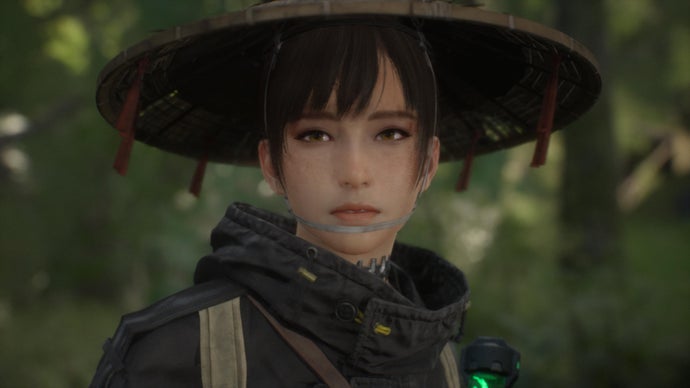 Eurogamer
Beast of Reincarnation review
Game Freak borrows liberally from the genre's biggest hits. And while its messy and muddled, it's salvaged by exhilarating combat and traversal, and a surprising amount of soul. Beast of Reincarnation's opening moments - its opening hours - are a lot. It's a game that begins with the forlorn history of a doomed world, that suddenly goes a bit sci-fi with the arrival of an AT-AT-like "walker" stomping across the landscape, then full-on explodes into a reverie of picturesque apocalypses, magic dogs and magic hair powers, cursed behemoths, pulsating forests, a holographic (possibly supernatural) child, an aging mentor called Brad, Souls-like respawns and Sekiro-style katana parrying - all set to a lilting, looping J-pop soundtrack. Pokémon developer Game Freak's latest project is a chaotic grab-bag of ideas and influences that, initially at least, struggles to find anything close to its own identity. There's a touch of Sony's Horizon series in its pretty post-apocalypse, here a verdant vision of a derelict Japan. There's some Bayonetta in that magical hair stuff; Sekiro is an obvious touchstone with its parry focused combat, its Soulsian respawn "campsites", its grapple-imbued traversal, and perfunctory stealth. And there's even an air of Monster Hunter by way of Wild Hearts and Shadow of the Colossus, as Game Freak builds its combat-driven action RPG around a quest to kill a series of imposing Nushi: majestic behemoths ruling over each semi-open region, a mix of beast and nature intertwined. Here's a look at Beast of Reincarnation.Watch on YouTube Welcome to a future (the drizzly post-apocalyptic summer of 4026 to be exact) where humanity has finally cast off its pesky emotions, and, in some cases, their frail human bodies too, shoving their souls into robot-like golems. Amid all this, there's a plague-like blight capable of sending golems into a violent frenzy and of transforming smaller creatures into Malefacts: aggressive floral hybrids complete with spindly vine appendages and leafy blooms. Then there's the titular Beast of Reincarnation, returning to the world after its 100 year slumber, whispers of a mysterious land called Shambhala, and you, Emma, a hunter with neither heart nor soul.It's a muddled narrative doled out in erratically paced fashion, and that approach is reflected elsewhere. Game Freak introduces its gameplay ideas equally chaotically, throwing so much out so fast, with so little explanation, it took me a fair while to wrap my head around it, let alone warm to it all. It practically demands you visit its in-game manual to properly understand the often convoluted interplay of its systems, and it doesn't help that during its critical opening hours, Game Freak has a habit of telling you something important then, instead of letting you put it into practice, pulling you away for another flashback or ponderous cutscene. 1 of 13 Caption Attribution Structurally at least, though, Beast of Reincarnation is easy to explain. And it follows a simple, predictable pattern as it journeys across post-apocalyptic Japan: through abandoned pockets of picturesque rural civilisation where mankind has retreated beneath the earth; through urban tangles of jagged skyscrapers and flooded subways stations lost amid verdant overgrowth; through ancient temples hidden in rugged mountains, and beyond.Upon arriving in each new region, your immediate goal is to locate its behemoth Nushi so that Emma might slay it and take its power. It's a core objective charting a linear route across the landscape, guiding you through some light platforming and a handful of combat encounters against lesser foes, occasionally punctuating progress with an arbitrary roadblock that needs to be resolved. Regions are semi-open areas, however (some notably more open than others), meaning there's usually at least some opportunity to break away and explore. Eventually, though, you'll reach the Nushi, and the familiar action-adventure rhythms make way for Beast of Reincarnation's big centrepiece moments; spectacular fights against a towering deer with tree-like antlers, a rampaging, bud-headed bull, and so on. Your initial encounter is a chance to learn each Nushi's powerful, albeit usually relatively narrow, moveset before it makes its eventual retreat. Then, after a bit more busywork, you'll meet it again for a trickier, more elaborately staged rematch. Defeating a Nushi means new abilities for Emma and a trip back to your walker - a mobile hub where you can shower off the day's accumulated gore, plant crops, bond with friends, enhance your weapons and abilities, and pet your giant dog companion Koo - then it's onto the next region for more. 1 of 13 Caption Attribution Two systems are key to all this: combat, obviously, and some enjoyable traversal. The latter is primarily built around those magic hair abilities. Hold the jump button and you'll shoot skyward on a column of your blighted strands; hold another and you'll conjure up a winding bridge of hair-vines, useful for crossing abyssal divides. A third button flashes out a ponytail capable of latching onto grapple points, flinging you forward at speed. It's a small but effective toolkit deployed across levels with a pleasing sense of verticality. And it lends traversal an invigorating sense of fluidity and forward momentum - one that's engaging enough you'll probably stop questioning why you can't ride the bloody massive dog that follows you everywhere.Instead, lovely fluffy Koo is a fundamental part of your combat arsenal, and Beast of Reincarnation's battle system is, when it's not being undone by some troublingly persistent issues, a highpoint. Yes, it's a little convoluted, and its many seemingly disparate elements take a bit of time to understand. But slowly - if not always elegantly - it settles into its own enjoyably distinctive rhythm. You've a couple of (largely ignorable) ranged weapons, for starters, but Emma's real tool of choice is her katana. And while you'll spend a lot of time slashing, dodging, and hairing your way around the battlefield, Beast of Reincarnation's main focus is parrying. Guard an attack rather than parry it, and your Entanglement meter will deplete until you're staggered; but parry instead of guarding and you'll gradually build it up until you're able to trigger a slow-time ability, expanding your window of attack for a couple of seconds. Parrying also generates the bloom currency required to utilise Koo's pseudo-turn-based supporting abilities (tactical commands presented as a somewhat overwhelming wall of text I still haven't quite got used to yet), ranging from toothy chomps to movement-restricting vines. These also usefully restore a bit of Emma's health when deployed. 1 of 13 Caption Attribution Somewhere in all this, you'll juggle different upgradable elemental weapons, food bonuses, equipable gem boons, auto-use consumables, core ability upgrades, and a steadily growing selection of Bloom Arts, which manifest as unlockable combos capable of doing significant damage. And when it works, when it all comes together, it's great, lending proceedings a distinctive push-pull rhythm of timing, observation, combo deployment, and gauge management that's as rewarding as it is exhilarating. Unfortunately though, thanks to an incessant series of accumulative niggles, it's quite often none of those things.The camera, for instance, can be a nuisance, especially given the erratic, single-point lock-on system, which doesn't always play nicely with the massive Nushi and which, during group encounters, has an annoying tendency to switch targets on a whim (you can turn it off, but that just introduces a fresh set of problems). It's all too easy to land in situations where you're expected to repel powerful attacks you can't see coming from offscreen. And it doesn't help that the mix of murk and excessively flashy particle effects can render enemy wind-ups unreadable, particularly when dealing with smaller foes. And given that combat is balanced so that death is only a couple of hits away if you're not parrying, frustration is everywhere. Something feels very off on PS5 too (I've been unable to test this on other platforms), with certain critical actions - drinking health potions, activating slow-time, even dodging on occasion - failing to register consistently. I'm all for a challenge, but too often it feels like death in Beast of Reincarnation arrives through no fault of my own. It's a common enough occurrence in fact that, at times amid the poorly paced tutorials and wonky explanations, I even started to wonder if I might simply be playing it wrong. But even accounting for potential user error, it feels like there's enough unavoidable aggravation here to be a genuine concern. And, unfortunately, all this stuff is compounded by other issues. The maps, while pretty, are for the most part dull; devoid of meaningful features, visually indistinct in all but the most superficial of ways, light on enemy variety, and rarely managing much in the way of imaginative moment-by-moment combat encounters or engaging level design. And the desolate emptiness of the world does, I think, start to work again its Soulslike structure: I've done this respawn dance enough times to be fine with a runback if there's something interesting to do along the way, but here the expansive nothingness just feels like a lot of timewasting. And given the rewards you'll find away from the main path are largely inessential, there's limited incentive to explore. 1 of 13 Caption Attribution Admittedly, the simple pleasures of traversal do go some way toward offsetting the tedium, and as ever with this sort of thing, there's a kind of low grade got-to-collect-it-all kleptomaniac thrill for completionists. But even here, things come a little undone by the ease in which you can get caught on the world geometry, or slam into an arbitrary invisible wall, or - as polygons melt into mush and textures turn into smears - feel so dangerously close to falling out of bounds. If it wasn't already obvious, I have some very conflicting feelings about Beast of Reincarnation. There are moments it's glorious; when you're parrying majestic behemoths in an exhilarating dance of meticulously timed sword ripostes and searing slo-mo flower blooms, or hair-twirling with acrobatic abandon across striking landscapes of beautiful desolation. But there are just as many moments it feels aggravating, unfinished, and, worse, dull. Yet even so, I've found myself growing unexpectedly fond of its broken world and equally broken crew, moved by the affectingly melancholy ambience that permeates it all. Game Freak's action RPG might be messy, but there's something deeply authentic about it too. Out of its disparate grab-bag of familiar bits, Beast of Reincarnation slowly finds itself. And the tale it tells, of self-discovery and community and belonging, is an unexpectedly tender one. To make me care amid so much irritation is no easy trick, but, as flawed as it is, Beast of Reincarnation's genuinely sweet spirit and an earnest heart shine through. A copy of Beast of Reincarnation was provided for this review by Fictions.
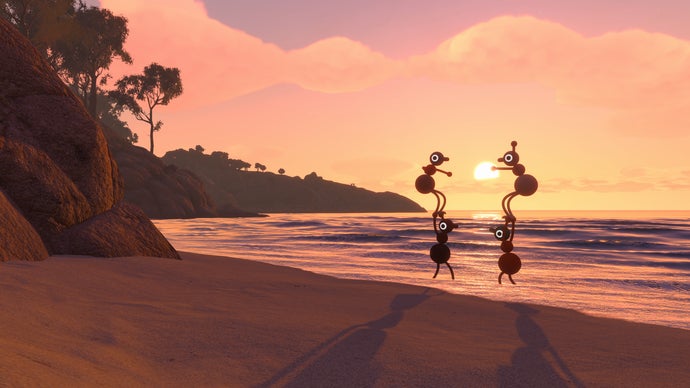 Eurogamer
Big Walk review
The Untitled Goose Game team returns with a funny, exciting, and deeply rewarding multiplayer adventure that combines knockabout fun with some surprisingly big ideas. "Chris, I think you're muted. Your nose has gone small." What is Big Walk, exactly? It's a simple game, really, but explaining what's special about it is a little more complicated. For starters, you might wonder if the latest game from Melbourne-based House House is anything like its breakthrough. Well, it certainly shares the gleeful devilment of its biggest hit. There are no geese here, though your colourful avatars do have a somewhat birdlike quality; big or small, that nose is slightly beakish. It's equally smart in the way it wields its silliness, similarly playful and exuberant, and stuffed with innumerable delightful little touches. Otherwise, it's not much like Untitled Goose Game at all. What it is is a hangout game par excellence, a superior class of what we must apparently now call ‘friendslop' – so, friendgourmet? Friendkino? It's also a co-operative puzzle game of sorts, designed for small groups; certain elements are retuned for two, three or four players but up to a dozen of you can take part if you have the numbers. But beneath all that, what it's really about is the frequent joys and occasional frustrations inherent to human communication. (Related: this is my third attempt at writing this intro.) Here's a Big Walk trailer for you.Watch on YouTube "I put a clock on your back a while ago, by the way." Big Walk is a little like going on an adventure with your friends while being slightly hard of hearing. By that, I mean its implementation of proximity chat, which is crucial to most things that are great about it, is tuned pretty aggressively – you don't have to venture very far from your mates to find yourself out of earshot. And that's precisely the point: you have the pleasure of larking about together in the wild juxtaposed with the feeling of being alone, whether you actively choose to wander off or simply lose sight of the rest of the group. That's typical of a game of unlikely contrasts and delightful little frictions. Its world is a sprawling island wilderness pocked with colourful man-made objects and landmarks. This appealingly incongruous mix – purposeful artifice meets untamed nature, the tension between the two lending the place a thrilling sort of liminality – speaks to the game's core principles. Here is a place that's mostly loose and relaxed, with plenty of room to explore or just mooch around, chat amongst yourselves and take in the views. And then there are pockets of space with more focus and purpose to them, where you need to work together as a team to complete the challenges you'll find there. With the HUD turned on, the hamburger icon at the bottom shows when you're carrying something. | Image credit: Panic / Eurogamer The curved, red objects that are your reward for solving these collaborative puzzles – vaguely resembling a bottle-gourd, or calabash – are effectively your main form of progression, unlocking a handful of genuinely transformative features. They don't have an official moniker, but our group adopts one after our host decides they look a bit like a certain canine chew toy. The name sticks, and soon it has become part of our shared language, such that no one bats an eyelid when one of us says, "I dropped the kong off the cliff."Here's the thing: one of you will almost certainly drop the kong off the cliff. It's perfectly round and smooth, and heavier at the bottom, which means one thing: it can and will roll as soon as you set it down. Leave one on the slightest of inclines and within seconds you will invariably find yourself sprinting after it. That's Big Walk for you: if there is an opportunity for mischief, something that will invariably lead to chaos (and perhaps even some mild chastisement for the dropper in this case) then its makers will grasp it with both hands. Otherwise, this place is largely player-ambivalent. It's never actively hostile, even if at night you instinctively wonder what might be out there – not least since Big Walk's island is clearly modelled on Australia, where a few species of spider are big enough to have their own postcode (fear not, arachnophobes; the only eight-legged creature you'll see is if you form a tower of four). But the presence of a designer's hand always gives something back. There is no need for a detective mode, no need to click in a stick or a trigger to ping the environment when just about everywhere you stand, there is something big and bright to draw the eye, and to orient you. Your avatar's arms will start flailing if you try to walk through water any higher than waist-deep. | Image credit: Panic / Eurogamer It's a comfort that in turn lets the developer make the world these structures are (house) housed in feel more authentic: the foliage is allowed to be dense, the rocks properly, well, rocky. Peaks are high, valleys are deep, cliffs are sheer drops. This is not a world you glide effortlessly over like many an FPS protagonist. Exploration can occasionally feel awkward and kludgy, and that doesn't always feel deliberate. More than once, one of our group gets gently stuck between two rocks – though even in the slightly panicky moments where a situation feels inextricable, I've yet to encounter a scenario from which anyone has been truly unable to escape. In any case, you can usually fudge your way up or down a steep incline. But when hunting for an object in the brush is part of the fun, why not take a death-defying leap from Big Walk's many peaks? The moment when you realise that you can run and click the right stick and hurtle downhill on your backside, those pipe-cleaner legs flailing, is an unfettered joy. Fifteen hours later, on my umpteenth slide, the pleasure is undimmed.Meanwhile, when darkness falls, which it does with alarming haste, Big Walk's creators have absolutely no qualms about letting it get really dark. Like Echoes of the Eye dark. Like Dire Marsh (Night) dark. That, of course, is your incentive to carry a light with you. There are torches, yes, but more common are bulbous little lamps – which are also prone to rolling, should you give in to the overpowering temptation to dropkick them. These are perhaps more effectively placed, though, in the circular receptacles scattered across the map, as a helpful reminder to show where you've been. Or, if your group has been separated, a signpost of sorts, pointing the way back to a reunion. The flare gun is another helpful way of showing where you are when you get separated | Image credit: Panic / Eurogamer Getting split up is normal – commonplace, even – in Big Walk's great outdoors. The game's exterior puzzles regularly contrive to force you apart: for instance, one of you might be invited to launch a sort of clockwork bomb, while another tries to retrieve it from its distant landing spot before it pops. Such instances encourage you to think about how you might stay in contact with one another. Walkie-talkies are the obvious solution here, but until you get a backpack – and what a revelation that moment is – you forgo the ability to carry a second object. In any case, there is no more effective separator than human curiosity, and the clumsiness that often goes hand-in-hand with it. Like the friend who sees something on the horizon and decides to make a beeline for it, neglecting to check you've been following them, or, distracted by something or other, strolls casually off a sheer drop, their instinctive "aaaaaah!" comically echoing like a Looney Tunes pratfall. Unless – until – you too hurl yourself from the brink. Either way, in Big Walk, you're never truly lost, or at least not for very long. You always have options: you could head for the tower on the top of the nearest hill and launch a firework to tell everyone where you are, or trek back to base and leave a written message on a whiteboard, say, to indicate your imminent whereabouts. Besides, there's a certain frisson to being alone, particularly if you're keen to scare someone. When our group meets back up after a mildly frantic ten minutes apart, we discuss the possibility of setting up a four-player game where one of the group is led to believe it's a three, the fourth cast as a malevolent presence to frighten the wits out of them. The portable lamps can cast eerie shadows at night. | Image credit: Panic / Eurogamer Partly because the organic elements of the world don't feel overly designed, it's a game that gently encourages an appreciation of nature – among the many sights you'll find yourself cooing appreciatively at, its seas and sunsets stand out. Yet, perhaps counterintuitively, what you're most likely to marvel at is the stuff that's been put here for you. At times it feels like a gigantic adventure playground, but there are interior areas here that feel surprisingly uncanny, and thus all the more exciting to tiptoe around. And indoors, the sternest tests of your ability to work together await. These puzzles typically force you into separate rooms, but almost always give each of you an incomplete picture, your task being to figure out how to make it whole. You might have to explain what you can see to someone who can't, or – when the others are still visible but no longer audible – figure out a system of gestures to talk to one another. It's a useful reminder of something we often forget in life: that a different perspective can help illuminate our own. "I'm gonna lock you in this building and have a little explore." Solutions can entail concocting new methods of communication on the fly. Or you might collectively look at the various pieces in advance, and come up with a plan of action to steer one another in the right direction, before shutting the doors and hoping it comes off. In some cases, you're effectively entering a code, and House House frequently makes you wait an exquisitely agonising few seconds as it pretends to process the answer before confirming whether or not you got it right. The anticipation! A portable radio lets you listen to Sam Gill and Luke Neher's excellent soundtrack while you explore. (Em Halberstadt's sound design, incidentally, is award-worthy.) | Image credit: Panic / Eurogamer (It's worth mentioning here that the answer to the eighteenth question on the excellent Big Walk FAQ is probably the most important thing you need to know going in. Click on that link, scroll down, read it, and come back. Got it? Going in, none of the people in our shared WhatsApp group reads that FAQ beforehand, and yet each of us understands that rule instinctively. There is an unspoken agreement to use the channel exclusively to arrange when next to meet up for the next part of this big walk. Which is only right and proper for a game that wants you to stop thinking about your phone for a bit. You're in nature! Let the terrible cacophony of the real world fade away.)And then: the release! The sound of a party blower and a shower of confetti to celebrate a successfully completed puzzle – followed by another short wait as the screw on a vice slowly unthreads to release your round, red prize – is a low-key sort of celebration, that nevertheless feels satisfying every time. And when you later place your reward where it belongs, you're treated to a sound effect that is up there with the all-time greats. With a decent set of cans, it's almost indecently pleasurable, producing a bassy, otherworldly reverberation that seems to ripple across the entire island: one more useful way of letting any stragglers know where you're at and what you're up to. I'm loath to spoil the bit of ceremony that comes when you've filled all the slots in a tower, suffice it to say that it proves more games could stand to be influenced by Timpsons. Special thanks to host of this particular Big Walk, Alex Spencer-Dale, a five-star human being. | Image credit: Panic / Eurogamer At times, it feels like you could explore this place forever (good job Odysseus didn't wash up here; he'd never have made it back to Ithaca) but, of course, all big walks must come to an end. At this point, the world opens up further by becoming just a little smaller, funnelling you towards a climax that, honestly, I think I'll probably remember for the rest of my days. "So. What happened with the kettle?" Indulge me just a little longer. I'm of an age where I sometimes find myself questioning the amount of time I've dedicated to playing and writing about video games. It's typically a background murmur in my brain, one I can silence by invoking CS Lewis and childish things. The noise has unavoidably become a little louder in recent years, which I think is a natural by-product of getting older, but also some of the concerns I have about the industry that seems to produce these things while chewing people up at a similar rate. I sometimes struggle to reconcile these fears and concerns I have with everything good I get from games. And so, more often than before, I find myself reaching for the experiences I've had that have truly stayed with me. Not just the games I've enjoyed in the moment, but the ones I can say, hand on heart, that my life has genuinely been enriched by. I'm fully conscious of, and a little anxious about, overselling something that a lot of people will treat as a lark, and – genuinely – good for them. Big Walk can absolutely just be that, if you want it to be. But I'm conscious, too, of where this all came from. The provenance of its development can't help but show through. This foldable map can help you plot the next part of your adventure – though you're bound to get distracted en route. | Image credit: Panic / Eurogamer Sure, I can't be certain that House House set out to make something quite this profound so much as they simply missed one another during the pandemic and wanted an opportunity to hang out together again. Yet I can't help but think back again to the existential horror of the concept of "social distancing" for tactile, emotional animals that thrive in company such as we. There's a touching intimacy about the way you don't actually equip your own gear but rather must actively clip it to one another's backs and hips: a slightly fiddly process I come to value more each session. It's there, too, in the comparative ease with which you can pick one another up: it's handy for certain puzzles, but it's also nigh-impossible to resist the impulse to hoick a pal up on your shoulder as you're trotting along to your next destination. There's a point when one of our group has to briefly step away from their PC; without a word, the two of us that aren't AFK begin carting him to a place he won't recognise when he gets back. Naturally, we clip a walkie to his holster, too, just so we can hear the confused "huh?" upon his return. Turning sideways so the rest of the group can see your character's bright eyes can also help you track one another in the dark. | Image credit: Panic / Eurogamer But yes, that ending. I'm reluctant to even hint at it, so I'll just say that it feels like a subtle but ingenious twist on a familiar game design maxim. If the best video game challenges test everything you've learned, this is more about what you've come to understand about the people you've shared this journey with, and the weird and wonderful ways you've invented to overcome the difficulties you've faced together.For a brief moment, I wonder if I'm the only one thinking it feels...magical? But of course I'm not alone – in any sense. As the game enters its closing moments, among the three of us that remain, there's a collective feeling of euphoria, of giddy triumph, of mild amazement, even. And there's something else in the mix, too. "Did either of you get a bit emotional back there?" The voice in my left ear seems to crack, just a little. I open my mouth to respond, and quickly recognise that the upcoming words are not going to surface cleanly. I nudge the right analogue stick, turning to face one of the dear friends I've shared this unforgettable adventure with. I press a button and my nose goes small. A copy of Big Walk was provided for this review by Panic.
 Eurogamer
Halo: Campaign Evolved review
Halo: Campaign Evolved review - a legendary game gets a curiously enjoyable makeover Warthogs and all. Image credit: Eurogamer Halo: Campaign Evolved is more successful at being a reinvention of an FPS classic than it is a reproduction - and that needn't be a bad thing. When Master Chief first sets foot on the unknown ringworld known as Halo, he is fighting for his life. Harried and ambushed by countless enemy ships, Chief's commanding officer scuttles their intergalactic craft upon the ringworld - assuming the human troops will fare better on this structure than face a cold, indifferent death in the vacuum of space. But once they set foot upon Halo, they realise all is not what it seems; here, they are trespassing on the work of a culture that has come before. They are treading on the face of a masterpiece. Interfering with greatness. I can't help but see the parallels to Halo Studios and Bungie. Halo Studios has an almost impossible task with Halo: Campaign Evolved. They are to infiltrate the world of Bungie's masterwork, and attempt to create a facsimile of it in an inferior engine, with precious few of the original developers to help steer them in the right direction. Conditions are hostile - so hostile, in fact, that even some of the architects of the original game are against Halo Studios. And yet, like one lone armoured supersolider wreaking havoc on a Covenant cruiser, Halo Industries has done something heroic here - it may not be perfect, but Campaign Evolved does manage to do the impossible: it summons the feeling of playing the original again for the first time. Here's a look at Halo: Campaign Evolved in action.Watch on YouTube There are plenty of changes, though. You can now aim down sights on every weapon (but taking damage still descopes you, promoting mobility over camping). You can sprint (once again, promoting adaptability and momentum). There are more vehicles dotted around the maps, harkening back to the original Halo's genesis as a 'vehicular combat' strategy game. There are more weapons for you to pilfer from the battlefield, more tactical options at hand for the harder fights. There are dozens of skull modifiers. The later levels have been rethought, stripped of their tedium, packed full of interesting new mechanics.Thanks to the series changing so much over time - the second game gave you the option to pick up an Elite's energy sword or hijack enemy vehicles, the third game introduced support weapons and equipment - my understanding of what a Halo game feels like has evolved so much since the first game. As a result, Campaign Evolved as a whole feels exactly like Halo now, even if - in the moment-to-moment - it plays like a different game. So going 'back' to the first game where I can sprint, use pretty much any weapon dropped by my enemy (up to and including the Sentinel Lasers of the Forerunner guardians) feels natural. Having recently played Halo: Combat Evolved via the Master Chief Collection, in fact, I felt frustrated by these omissions. The game may be a masterpiece, but it is very much shackled by the architectural constraints of the original Xbox. Image credit: Halo Studios My biggest complaint about the pacing of the original game are the last few missions: backtracking through levels you've already cleared, fighting the immensely repetitive and frustrating Flood - it gets tiresome quickly. Especially if you're a glutton for punishment playing on Heroic, Legendary, or - for your sins - Legendary, all skulls on. Campaign Evolved adds enough variation to Flood encounters that it keeps the interest a little higher, although there's only so much you can do to inject life into room after room of zombie-alien onslaught. The wayfinding that's been added to The Library and Assault on the Control Room levels is also a bit patronising; part of the charm in the originals was the expansiveness, the feeling of being dwarfed by a huge planet created by a race of long-dead sentients. Having some little arrows go 'this way, over here!' feels counter to the whole point of Halo, really. But at least the beating heart of the game is intact: I have long thought of Halo as a 'puzzle FPS', to some degree: on harder difficulties, managing your resources, knowing which weapons to pick up for fodder enemies and which to recover to take down harder foes - sword Elites, Hunter pairs, Wraith tanks - has always been part of the fun. And because of the weird-but-loveable enemy AI, you can respawn into a checkpoint 1,000 times and never have quite the same experience twice. This is all intact in the remake, albeit with more puzzle pieces to use thanks to the expanded armoury and remixed enemy encounters. It softens the experience a bit (and, later in the game, often feels a little unfair in its difficulty escalation!) but it keeps you on your toes. Seeing a platform teeming with Elites, Flood, and panicked Grunts in the closing moments of the Keyes mission, though, felt special. Like this is what Bungie had in mind before it had to start cutting things back to hit the original release date. Image credit: Halo Studios But all these iterations come at the cost of something quite nebulous. There was an artistry to the way original designer Jaime Griesemer placed encounters, vehicles, weapons on the map. There was an artisanal feel to the way Halo was crafted; the pace of it remains one of the best FPS experiences to date. Campaign Evolved turns up the dial on fun and approachability, but at the cost of this flow. It's a hard thing to define, but you feel this awkwardness most in the run of missions from The Library to The Maw. Notably, the places Halo Studios has chopped and changed the game the most.It's not bad, per se, but it's different enough to be jarring. In The Library, for instance, even on Heroic difficulty, you're given a shotgun and encouraged to play the game like an action hero; one-shot killing anything that dares get within spitting distance. You never feel the tension of your ammo running out, rarely feel your armour-plated back pushed against the cold metal wall as 343 Guilty Spark looks on, condescending. It's fun, it gets your heart rate up, but it's not Halo as you remember it. But that's fine, because you can always go and play the Master Chief Collection. Campaign Evolved is trying to give you something different. Image credit: Halo Studios The design philosophy is most obvious in the 'Meteorite' package of three new missions that have been added as a prequel to the game, completely original and created by Halo Studios. Taking place a year before The Pillar of Autumn exits slipspace to find the Halo ringworld, the missions follow Master Chief and Sgt. Avery Johnson on a covert operation to infiltrate a Covenant research ship and liberate captured UNSC marines. I rolled my eyes at this when it was announced: 'A prequel trilogy? How droll.' But this trio of missions highlights the differences between Bungie and Halo Studios so well, it almost feels intentional.Inspired by Troy Denning's Halo books, the writing explores Chief and Johnson's relationship, and introduces a pissed-off Helljumper into the mix to cast a bit of shadow on Chief's heroic status: a bit of in-game colour we're not used to seeing when it comes to Microsoft's de facto mascot. The design of these levels is also curious, if you complete them post-campaign: I think the original Halo is a restrained lesson in FPS design minimalism - you have tools, you have opportunities to use them, you are trusted to do what you will. You're a supersolider, after all. In Meteorite, you are led through a very distinct path, given very specific tools, and are pitted against very specific enemies. At one point, you are literally dumped into a Covenant hunting ground. You must react, not invent. It feels like the Halo Studios philosophy writ large. 1 of 3 Caption Attribution But that's not a bad thing. In fact, after inventing my way through bastard-hard skirmishes in the main campaign, this felt like a treat: a curated blockbuster moment, with high production values, clever ideas, and implementation of all the toys you'd want to see from the wider Halo toolkit. Smart, funny, and self-aware. If this is the future of numbered Halo games, count me in. But it's not Halo: Combat Evolved; a game that felt like a lesson in video game design and player agency. And that, really, is the central point of tension in Campaign Evolved. It's a good game, and I'd recommend it, but it feels wrong to wear the skin of probably the best FPS ever made whilst trying to Michael Bay it a bit at the same time. I don't think the Unreal Engine does the game any favours in its shakier moments, either. At times, you can see through the flashy facade: it's all a very good homage to the original Halo (which was built in a custom Bungie engine), but sometimes it's just a bit off. The longer you play with the assault rifle, the more you start to see the cracks: bullet spread is a bit weird, time-to-kill varies a surprising amount. Splash damage from plasma grenades and rockets feels unpredictable. Vehicle physics are wonky - even wonkier than they were in the 2001 game. The sound design pales in comparison to the 25-year-old forebear. Again, none of these things are bad. But when you're holding it all up to something iconic, storied, revered…well, the blemishes just show up even more, don't they? The original Halo is a work of archival significance, a watershed moment for first-person shooters and video games as a whole. Halo Studios had an impossible task in being asked to improve on (or even reinvent) perfection. Campaign Evolved represents a diligent effort - at least at reinvention, if not truly accurate reproduction - and a worthy addition to Halo canon. But it also lives in the long shadow cast by the monolithic status of Combat Evolved. The campaign proper is still one of the best 10-mission runs you can play today, so timeless that Campaign Evolved, warts and all, still establishes itself as a phenomenal entry point for newcomers to the series. And with all the bells and whistles present in this Campaign Evolved experiment, it's a worthwhile skirmish even for Halo veterans. But it struggles to live up to the mechanical and artistic genius of 2001's opus. Campaign Evolved is a game that was always going to be dwarfed by its own legacy. A copy of Halo: Campaign Evolved was provided for this review by Xbox Game Studios.
 Eurogamer
The Incident at Galley House review
The Incident at Galley House review - one of last year's best adventures gets a chillingly brilliant glow-up An affair to remember. Image credit: Eurogamer/Evil Trout/William Rous The Roottrees are Dead studio Evil Trout gives William Rous' brilliant lo-fi deduction thriller Type Help a slick remake, and while the changes are many, it remains a smart, rewarding, and hauntingly effective mystery. There's a machine in The Incident at Galley House you'll spend an awful lot of time with, and it's a wonderfully tactile thing. It's part mixing desk, part paranormal enigma, part over-engineered Guess Who game, and full of clicky dials, chunky buttons, and a big old whooshy lever you're forever manipulating. And if your deductive instincts are good enough, it whirs into crackling life like a haunted slot machine, rigged to deliver strange psychic visions. It's one of several changes this intricate glow-up of last year's acclaimed (and Inkle-approved) mystery adventure Type Help makes, and the differences are fascinating. In its original free guise, William Rous' Type Help offered a moody lo-fi trawl through an ancient computer hard drive, presenting its central mystery - of an abandoned murder case and a chilling slow burn sink into loss and paranoia - entirely through text. It demanded players use a command line interface to scour annotated transcripts of a fateful night in 1936, intuiting the whos, whats, whens, and whys to delve even deeper using an earlier investigator's elaborate indexing system. There was an elegance and intimacy to its rudimentary interface that made its intricate narrative and deductive excavation even more consuming. The Incident at Galley House trailer.Watch on YouTube By contrast, The Incident at Galley House (from Evil Trout, the studio behind last year's highly acclaimed deductive adventure The Roottrees are Dead) trades minimalism for maximalism, and the grounded analogue realism of the original Type Help for a kind of spooky tech-magic abstraction. The vibe's different enough that trying to answer the question 'Which one is better?' feels like a pretty futile undertaking. Evil Trout's remake, though, is inarguably the more accessible of the two, skilfully adapting Type Help's somewhat intimidating text-only systems to create a far more welcoming game.It starts with those murders: eleven corpses found at Galley House, ten of them still doggedly eluding identification years later. Except it's not 1936 and we're somewhere much closer to the present, attempting to solve the mystery using an abstrusely engineered "seance machine". It's a slightly daft tech contrivance Evil Trout uses to explain away why Type Help's text-only transcripts now manifest with sound and voice and images. And it's an abstraction that feels a little distancing - twiddling fake knobs to manifest psychic visions doesn't provide quite the same kind of immediacy and connection as rummaging through a fake computer by typing away at your real one - but the studio makes up for it elsewhere. On a fundamental level, though, this is the same game, utilising the same rich transcripts and built around the same sort of database reverse-engineering that made the original so rewarding. Here, the 1936 incident visually unfolds across a 24-hour timeline split loosely into one-hour blocks. At any time, Galley House's guests can be found somewhere on its grounds, and by carefully scrutinising the currently available transcripts, it's possible to discern - or at least infer - who is where and when and with who. In turn, this information can be reduced to a simple code and then fed into your machine, one satisfyingly chunky dial twiddle and button prod at a time. Get the details wrong and you're rewarded with an anticlimactic electronic fart; get it right and you'll unlock a new scene. 1 of 9 Caption Attribution In that regard it's simple, but Galley House immediately complicates things with obfuscation. It's not quite so withholding as playing in text, true - you see where each scene takes place and hear its principal characters' voices - but you don't at first know their motives, relationships, names, or faces. So for a while, your primary goal is identification, listening out for name drops and other scraps of information, assigning names to faces where possible, then revisiting past recordings to see if you can learn anything new after all that recontextualisation.It's properly satisfying when a big-brained plan comes together, and its connective threads are carefully balanced between blatantly obvious and trial-and-error inscrutable. Galley House massages the pen-and-paper demands of the original too, featuring some smartly designed visual tools that let you quickly leap between timelines, people, and places, cross-referencing and annotating at will - and reducing the likelihood you'll get too lost in history's labyrinthine muddle. Detective work does, admittedly, settle into a slightly less interesting groove at the midpoint, when it's more about figuring out everyone's timetable, but it's a marginal complaint given the thunderous story turns and some clever structural design that gradually pares things back to ensure increasingly taut narrative momentum. For a long while, mind, Galley House feels as much interpersonal drama as it does mystery, as much Downton Abbey as it is Agatha Christie. And the script takes time, and a lot of words, to lay down some critical foundations. This creates another challenge for Evil Trout and the studio opts to bring the wordy story to life through a more accessible mix of visuals and audio. 1 of 9 Caption Attribution Art-wise, there's a bit of 3D to give your ludicrous paranormal contraptions some presence, but scenes from the past are primarily delivered through lavish 2D backdrops and static, single-pose character art. It's serviceable enough, sometimes striking, but equally hampered by awkward corner-cutting. Characters rigidly teleport around scenes, standing blank-faced and motionless in moments of high drama. Poignant scenes of their deaths turn ridiculous as they stay on their feet while characters fret around them. And the key character-swapping puzzle mechanic means that, to avoid having to draw everyone in every situation, characters distractingly revert to silhouettes when they aren't standing. Where it underwhelms visually, though, its audio excels, and I think it's here The Incident at Galley House properly justifies its existence as something genuinely additive to the original. This is a doomed world brought to life through wonderfully atmospheric soundscapes - from tyre wheels in thick mud and violent rain storms to crackling fireplaces and clinking cups of tea - through a synth score that switches subtly from quiet ambience to discordant nightmare. And through a stellar voice cast, which, after an appropriate bit of Radio 4 drama country house stuffiness early on, really commits to a challenging second half, when the true emotional horror of it all slowly becomes clear. As in all good mysteries, the clues are there from the start, of course. Why were these victims never identified? Why was Galley House believed to be deserted? Why does something seem off, even from the very first scene? These kinds of non-linear narratives always feel like a bit of a magic trick to me, maintaining their shape despite their fragmentary nature, and Galley House - like Type Help before it - doesn't just work because it's good at making you feel smart, it works because it tells a cracking tale. It's a gripping thriller, a period piece murder mystery, a ghost story of sorts. And once the machinations of its central enigma assert themselves, something genuinely chilling too. Sometimes Galley House - particularly in a coda overeager to explain - is a strong argument that less is more, but Evil Trout simultaneously manages to prove that more can also be more. And so, like a memory resurfacing from a clouded past, one of last year's best mysteries becomes one of this year's best too. A copy of The Incident at Galley House was provided for this review by Evil Trout.
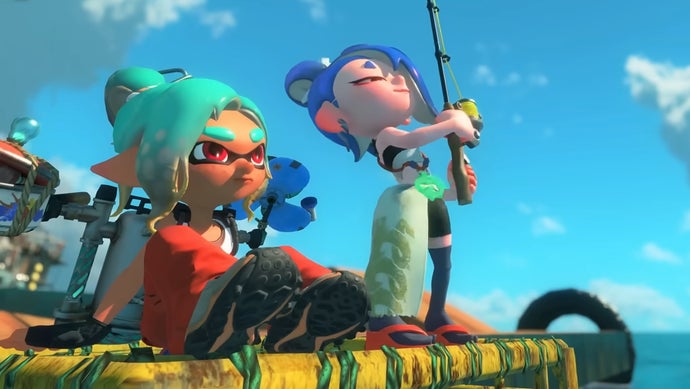 Eurogamer
Splatoon Raiders review
Splatoon Raiders review - thrills to the gills Salmon max. Image credit: Nintendo This series offshoot is a hectic, often overwhelming delight. One of the micro-trends I've been happiest to spot in the last few years is Nintendo's embracing of what you could term apocalyptic simplicity. And by micro-trends, I mean this: I've spotted it in just two games. The first of these was Donkey Kong Bananza, a wonderfully propulsive beat-'em-up in which the 'em you were often beating up was the environment itself. Bananza was all about being powerful and fast and using your fists to smash through the earth, turning each carefully crafted level into so much gravel and sand. It was all about digging through stuff until there was no stuff left. And it turned out to be Nintendo's most joyous game in quite a while. And now Splatoon Raiders is here. It's a third-person shooter, but it piles on so many enemies, often of such great size, that you're frequently blasting away at anything and everything around you. You drop into a level, you kill pretty much everything that spawns, and then you collect any trinkets that are left behind afterwards. Reader, it is bloodthirsty stuff. And like Bananza, it's a game that would rather fling more at you than you can parse than slow down for a second. To put it another way, both games pursue absolute carnage so thoroughly that the camera sometimes can't really keep up. Rather beautifully, the game itself doesn't seem to mind. Here's a Splatoon Raiders trailer to show it in action.Watch on YouTube In Bananza, the camera often had to follow you down underground into gorilla-sized tunnels that were being cut through all kinds of delicious rocks. Odd viewpoints ensued. In Raiders, the camera often has to follow you into the midst of battles in which vast enemies are clipping through the picture plane and then exploding with gunk. The endless churn of the thing!Both games are so confident in their hectic action that not always being able to see what's going on doesn't really matter much. In Raiders, specifically, you can be guided by your ears. Enemies are often chunky and taut of skin in this world, so each connecting shot lets out a kind of snare drum rat-a-tat, far faster than any sensible snare drummer would ever choose to play. It does its job beautifully: you're on target. So you can trust the game, is what I'm saying. You can trust Nintendo. 1 of 4 Caption Attribution Bananza has been a constant presence in my thinking as I've played Splatoon Raiders, but in truth there's probably a more straightforward lineage. If you've played any of the last few Splatoon games, you'll know that these PvP shooters feature a kind of PvE offshoot called Salmon Run. These are moments where you take your gang of ink-flinging squid and face off against monstrous fish creatures. These missions are all about surviving waves of hideous enemies and escaping with as much loot as you can carry. Splatoon Raiders takes this idea - along with armfuls of Splatoon weapons and tentacles-full of Salmon Run enemy types - and spins it off into its own thing.So you're exploring a strange series of islands hunting for treasure. Your base is a makeshift raft where you can pick over your winnings and level up various weapons and powers. And from there you head off to explore little archipelagos, or to drill down through cave networks, in search of loot and with a mission to splatter pretty much anything that moves. And there's a lot of stuff moving. That's the basics, and it turns out to be the basics for a thrillingly single-minded action game. Whatever you do, you're leaving the base to kill stuff and gather loot. And the loot you gather is brought back to base where you use it to get better at killing stuff. (I'll put this in here: you can do all this alone or with three friends, both online or in local wireless.) Image credit: Eurogamer / Nintendo It helps that, with Splatoon, Raiders has a central collection of systems that are amongst the best in modern action games. Ink is your ammo for whatever weapon you're taking out into the field, but it also coats the surfaces it comes into contact with, and when you're on a surface covered with your specific colour of ink you can switch to squid form, which allows you to duck down into the ink, avoiding your enemies while simultaneously refilling your ammo.You can also use your ink to zip around really quickly, even climbing walls or sliding through grates if you've splashed enough ink around. Enemy ink, meanwhile, slows you down and can cause real trouble. There are no overt territory capture mechanics in Raiders as there is in Splatoon, but there might as well be. It's often still in your best interests to paint everything you see. When it comes to combat, you can fling ink using everything from machine guns to huge paint rollers to a single paint brush. This paint brush has always seemed like the rapier of the Splatoon series to me. It's the weapon of nobility, elegant and dashing. But it's also incredibly hard to use really well. A lot of the weapons come with learning curves. And such is the hectic nature of Raiders that I worked my way through the campaign using twin pistols and machine gun variants more than anything else. I still had a lot of fun. 1 of 4 Caption Attribution Understanding your weapons is closely linked to understanding your enemies, many of which return from Salmon Run. There are standard wobbling horrors and little guys with flying pans, but as you see more of the game you get the mechanical eels, which come on like freight trains, spewing toxins, and steered by a single operator at the back, tower guys (a nasty amphibious laser beam mounted on top of what appears to be a teetering pile of saucepans) and all sorts of other, bigger terrors.They're wonderfully grim, incidentally, and so is the wider world of Splatoon Raiders. The archipelagos you travel across are caught somewhere between post-industrial wasteland and the inside of an ash tray. Salmon Run itself was gloriously grimy, so it's nice to see the weird aesthetic continued here. These enemies spawn in groups, and Raiders is at its most thrilling when you're racing into the fray, surrounded by baddies of all different kinds, some of which need to be whittled down, some of which need to be shot from specific angles, some of which fly, or erupt from the ground, and some of which do as much damage as they expire as they did when they were around. 1 of 4 Caption Attribution Most of the time, you're in the thick of this, dodging ink and all kinds of other projectiles. The game's relentless pace, I think, comes in part down to the way these guys spawn in waves, and the fact that incoming damage generally doesn't seem to interrupt whatever you're doing, which is generally shooting back or reloading. What this means is that, every time I die, it always seems like a total shock - I had no idea I was even sick! But it also gives the game a constant sense of forward momentum that reminds me - odd to type this? - of the recent Doom games.Alongside traditional weapons you also go into battle with an ink tank on your back, after picking from a range that all have their own qualities and special abilities, as well as relics, that grant useful perks, and gadgets that allow you to pull off special moves. I like the gadget that allows me to jump up and then do massive area damage, for example, and I like to pair it to the gadget that creates a circle of ink around me. Gadget choices are linked to your choice of tank, and they can be flared in unusual directions by attaching parts that grant special upgrades. All of this stuff can be found in the field as loot or upgraded back at the base. There's a load to tinker with, and it allows you to play in interesting ways, but it's designed to be fun to experiment with rather than a system of tortuous intricacy. Image credit: Eurogamer / Nintendo There's also a companion mech you take with you, who's CPU controlled and looks after themselves. You can use this mech to grant you a double-jump, and you can also trigger a special attack by charging it up through the collection of orange eggs your enemies drop. These things are game changers, and can of course be levelled up and tricked out back at the base. You can also change the nature of the special attack by changing the member of your team you take out with you in the mech. If you're starting out, may I recommend Frye, who summons a storm of morays from the sky. Mission types mainly fall into either exploring an archipelago and clearing out specific nodes so your mech can drill for treasure, or drilling through a series of underground chambers and killing everything there. Often these chambers will have a time limit, during which you have to collect a certain amount of orange eggs to charge up the mech enough to drill down to the next later. Written down this seems complicated, and there are additional types of level that encourage you to use specific parts of your arsenal in ways that feel almost puzzle-like. But generally, if you're playing Raiders, you're blasting something and trying to stay alive. It's wonderfully direct stuff. And as with Bananza, what I'm left with at the end of it all is a sense of astonishment. This game is so carefree in its mayhem, so uncluttered in its thinking, that it absolutely reeks of youthful confidence. Let's spin this PvE mode off into its own game! And let's not worry too much about whether you can follow every second of the action when things get wild. Better to let them get wild in the first place! This is the trick with Nintendo, I think: a sense of eternal youth when it comes to its design. And for now, that youthful energy is pursuing apocalyptic simplicity. Not bad. A copy of Splatoon Raiders was provided for this review by Nintendo.
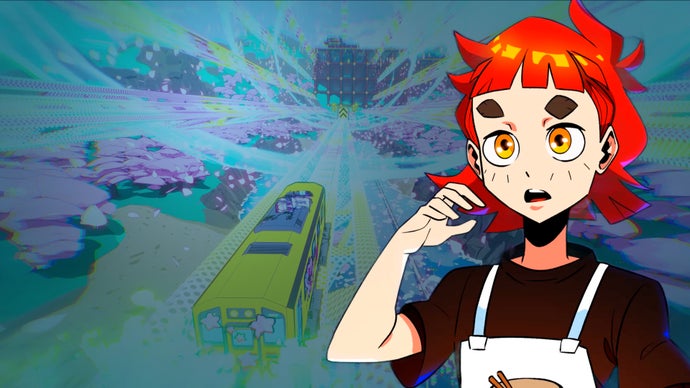 Eurogamer
Denshattack! review
What do Jet Set Radio, the PS1-era Tony Hawk's games, Hi-Fi Rush, and OlliOlli all have in common? Well, aside from being clear influences on Denshattack!, they are all cult classics: games that remain relevant, popular, and influential way beyond their respective eras. And it looks like they've got another stablemate in Undercoders' unlikely arcade grind-'em-up. Because this game is incredible. Read more
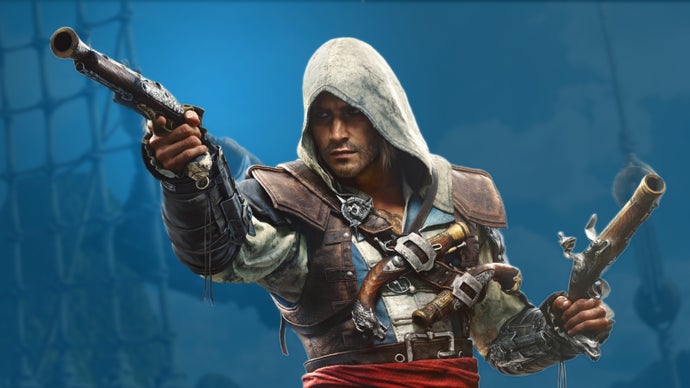 Eurogamer
Assassin's Creed Black Flag Resynced review
Are you familiar with the Ship of Theseus? It is an ancient philosophical thought experiment about whether an object is the same thing once all of its constituent parts have been replaced. It is a paradox, a fun poke at themes of identity and continuity, and greater minds than mine have attempted to answer the riddle through philosophical, mathematical, and metaphysical lenses. But today, I am going to apply the question to Assassin's Creed: Black Flag Resynced. Read more
 Eurogamer
Rhythm Paradise Groove review
The beat-matching classic returns in fine voice. Read more
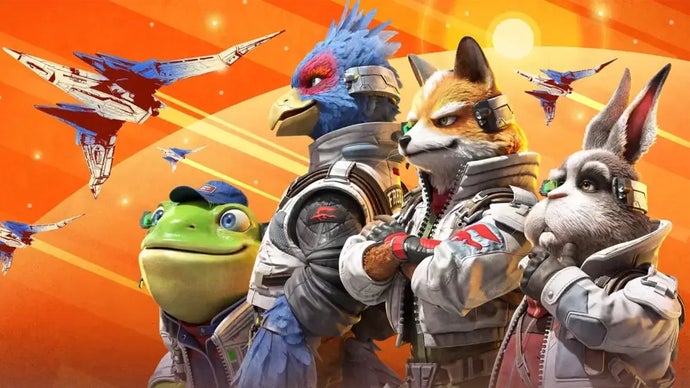 Eurogamer
Star Fox review
I recently finished reading Keza MacDonald's excellent Super Nintendo, a largely celebratory book about the company that "helped the world have fun", which nevertheless sounds a note of understandable caution at its conclusion. The author is concerned – and it's a concern I share – that Nintendo has been playing things too safe of late, that its release slate (with the odd exception) has become alarmingly conservative. It's time, surely, for the next Splatoon, and by that I don't mean Raiders. As hardware goes, Switch 2 is no big swing, and so far its software has generally followed suit; Super Nintendo rightly laments the loss of the "freewheeling creativity" of the Iwata era in particular. "Nintendo knows well the power of nostalgia," MacDonald writes. "But unless it continues to create new ideas alongside honouring its legacy, Nintendo won't be able to keep its cherished position in popular culture." Read more
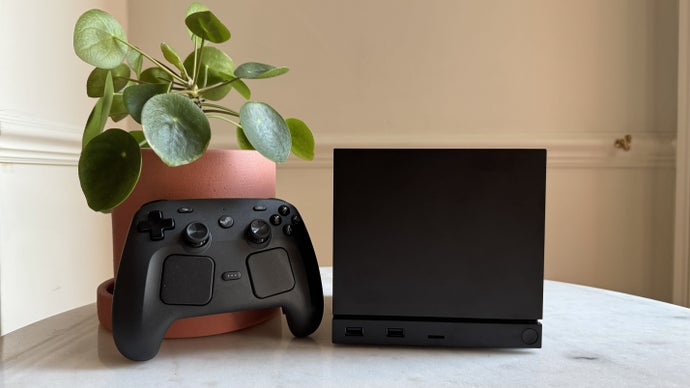 Eurogamer
Steam Machine review - an utterly lovable, probably too niche, definitely too expensive gaming curio
What is the Steam Machine? I must admit I've spent a good portion of my time with the thing trying to figure that question out. Valve will tell you, as they told us, that it's essentially been made for the people who want to bring their existing PC library - on Steam and elsewhere - to the living room. It's a noble goal, and one the company's been toying with for more than a decade, since its introduction of Big Picture Mode as far back as 2012, through the original wave of third-party Steam Machines that launched in 2015, to the Steam Link and beyond. Read more
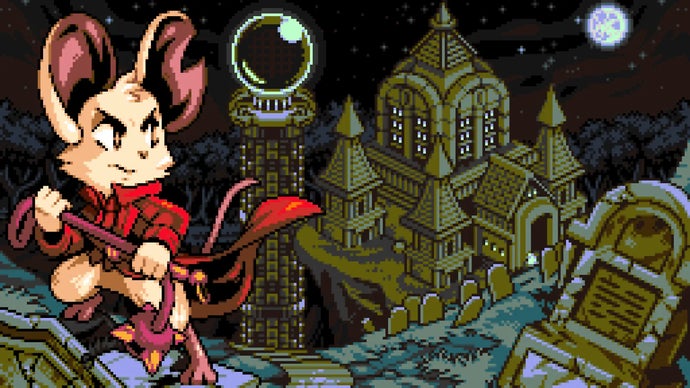 Eurogamer
Mina the Hollower review
Here is a game that feels like an adventure. And it feels like it was an adventure to make, too. Mina the Hollower took six years to design and build, six years that took it from what sounds like a kind of coding doodle to a panoramic journey across a richly imagined island, taking in platforming and combat, puzzle-solving, and sheer immersion in the world building. It's Zelda and it's Bloodborne. It's smacking bosses and reading the in-game newspaper. All of which is to say that those six years of design work are apparent throughout, in the complexity of the landscapes you travel, in the density of the secrets and the lore. Read more
 Eurogamer
007 First Light review
The magic of 007 First Light is in the bluff. When IO Interactive's young James Bond is caught out yet again trying to sneak through some restricted area, he has numerous ways to resolve the situation. Gadgets. Fists. Guns. Whatever's lying on the nearest surface. But the most novel, and in some ways most satisfying, is simply to blag it. Pressing Circle (on PlayStation) will cause Bond to blurt out some impeccably improvised lie, stunning guards into second-guessing their suspicions and opening a brief window for Bond to slip by. Read more
 Eurogamer
Yoshi and the Mysterious Book review
Yoshi and the Mysterious Book might be the loveliest surprise of the year so far. It certainly is for me. Going in, I don't think I was expecting too much. There's the slightly forgettable title, for one thing, and then I'd picked up the idea that, since this wasn't a Zelda or a mainline Mario, I could probably give it a miss. Read more
 Eurogamer
Lego Batman: Legacy of the Dark Knight review
There's something that really stood out for me as someone in the UK who collected American comics at the end of the 1980s. It's that each new comic you got was a doorway to a world of absolute chaos and gimmickry. I'm not talking about the comic stories themselves, but about the American ads that were suddenly blaring out of the alternate spreads. Topps bubble gum cards. Garbage Pail whatevers. Endless enticements to buy Bayou Billy on the Nintendo Entertainment System. You'd be reading about Batman, knocking gloomily around some Gotham spire, and then you'd turn the page and, WHAMMO, something completely bizarre was being pitched at you. Read more
 Eurogamer
Zero Parades: For Dead Spies review
One of the first things I learn about myself in Zero Parades is that I'm a fuck-up – an omnishambling bad omen with cropped hair and unfair cheekbones. Before I was put on ice, I was supposedly one hell of a spy. But that was then, and this is now. The veteran spy fallen from grace is not a new story, but in careful hands, it is almost always a great one. There are so many tiny little things that go right and wrong for an agent in the field: an indifferent tsunami of luck and skill and wildcard entropy that keeps going until the last plastic domino lands on the worst outcome. This is how I end my story as Cascade, an operant who looked her mistakes square in the eye, and believed that maybe, just maybe, the dice and the stars would align for her. They didn't. Read more
 Eurogamer
Invincible Vs Review
The sentence: "An Amazon television show video game tie-in" is about as big a red flag as a two star hygiene rating on a kebab van. You would not be at fault for looking at Invincible Vs with narrowed eyes. However, would you believe it, Invincible Vs is an exceptionally enjoyable game. Not only does it do wonders as an adaption, it might just be one of the best fighting games released in recent years. Read more
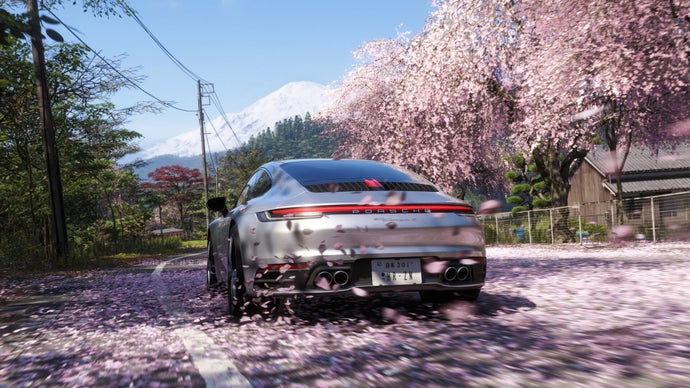 Eurogamer
Forza Horizon 6 review
Forza Horizon 6 does not reinvent the wheel. It doesn't need to. The latest open-world racing behemoth from Playground Games instead rethinks and reworks the five titles that came before, trimming the fat and reintroducing the best bits to make Forza Horizon 6 the cleanest, buzziest, and most engrossing experience it can be, all galvanised by a stunning Japanese backdrop, and flavoured by decades of well-researched Japanese car culture. I think Horizon 6 is the highlight in a pantheon of already great racing experiences, and shows Playground Games as a developer at its peak. This is the best racing series in gaming, but that accolade comes with some caveats. Read more
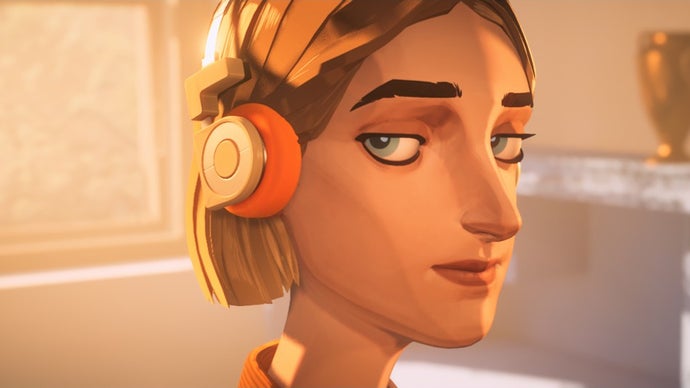 Eurogamer
Mixtape review
Maybe it's because I've just played through several hours of teen rebellion, but I feel like breaking some rules. Unfortunately these are rules of video game reviewing, which I am paid to care about (and do actually care about, because I am sad) but which I really ought not to ever burden you with because they are, let's be honest, incredibly dull. So apologies and also: please adjust your excitement downwards, because the circumstances around Mixtape mean I'm obliged to start talking about them. Read more